
Last updated September 10, 2026
Full 25-point door and opener safety check with every visit - springs, cables, rollers, tracks, and your LiftMaster or Chamberlain opener included
You get a price before we start. It does not change when the truck arrives.
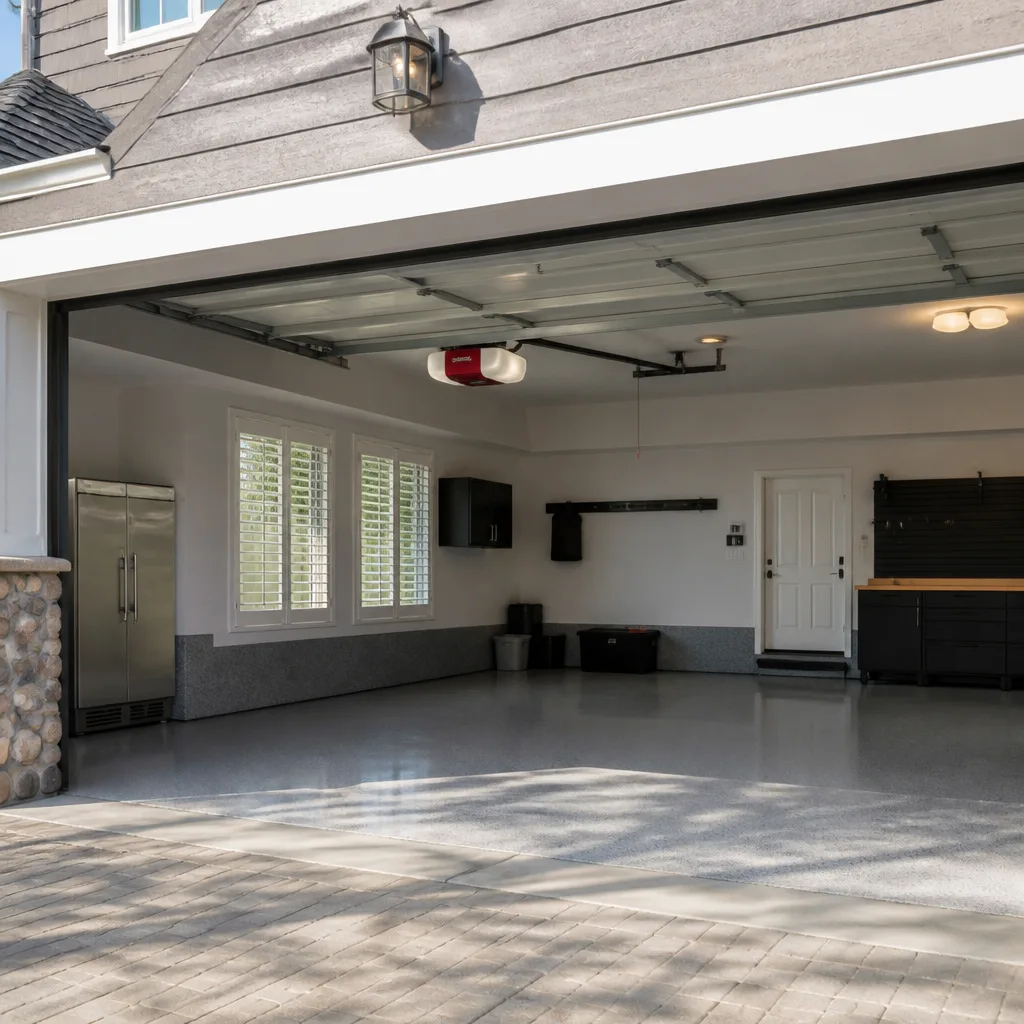
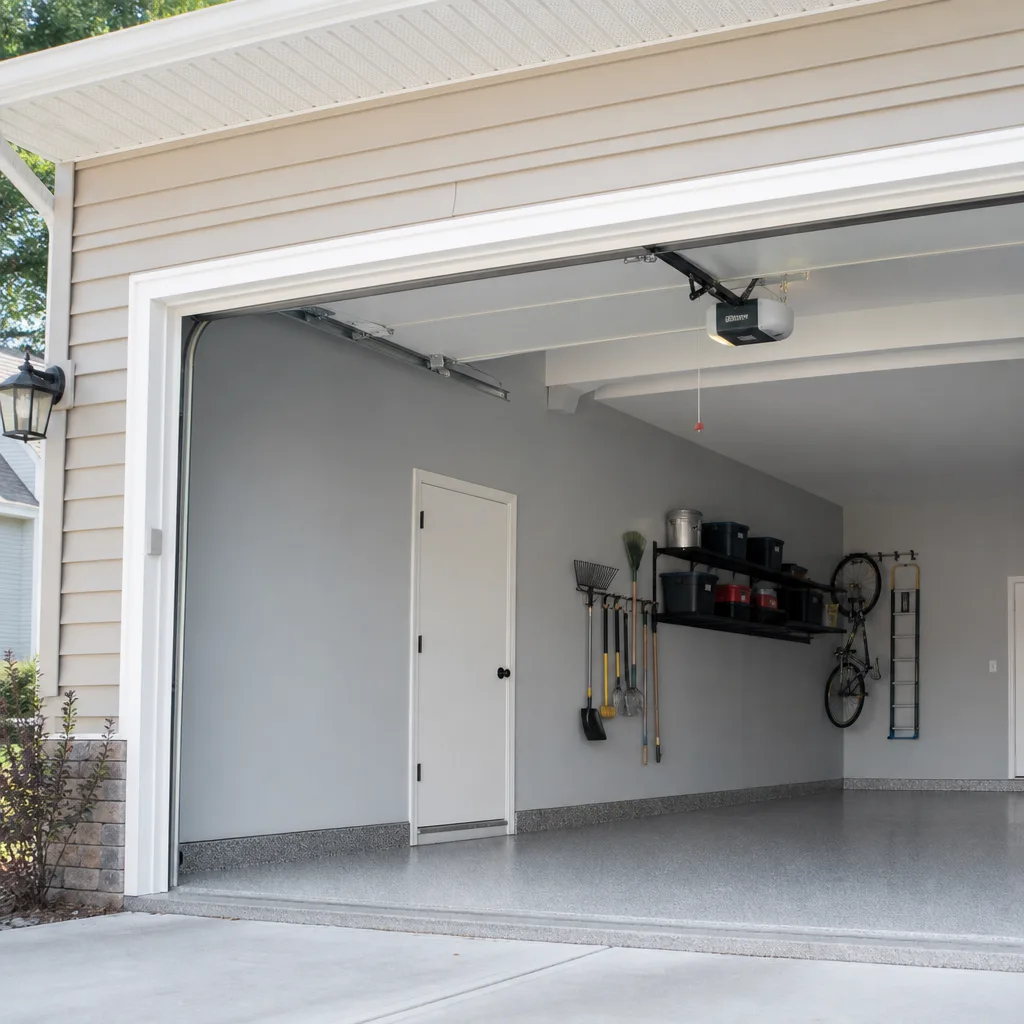
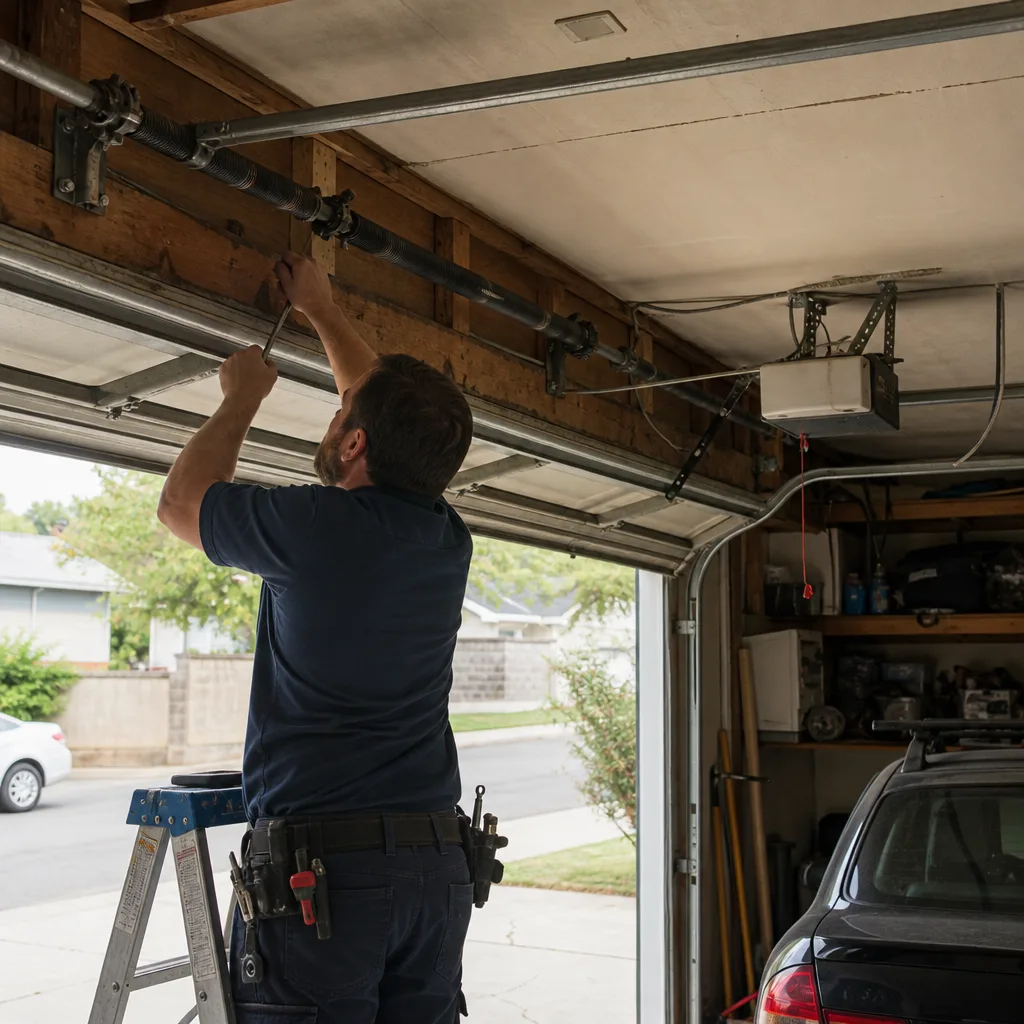 Before
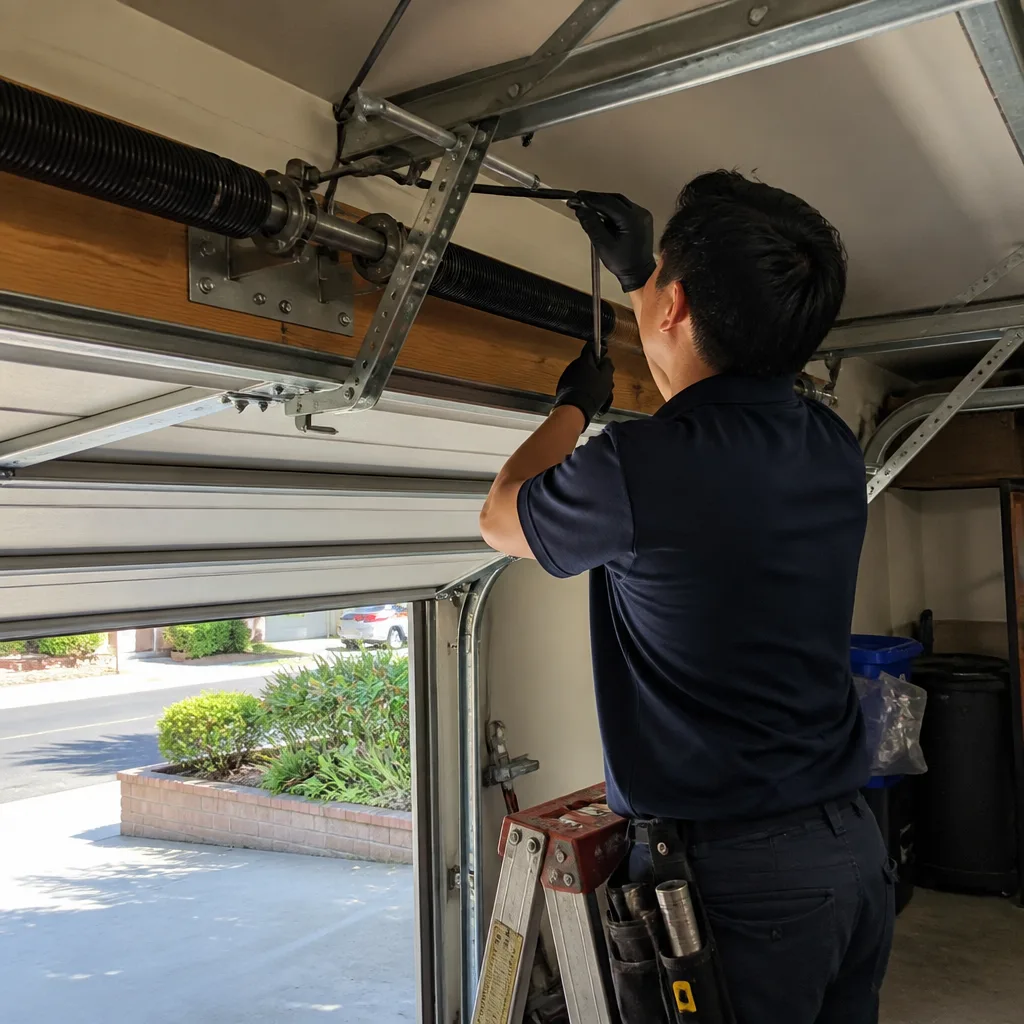 After
After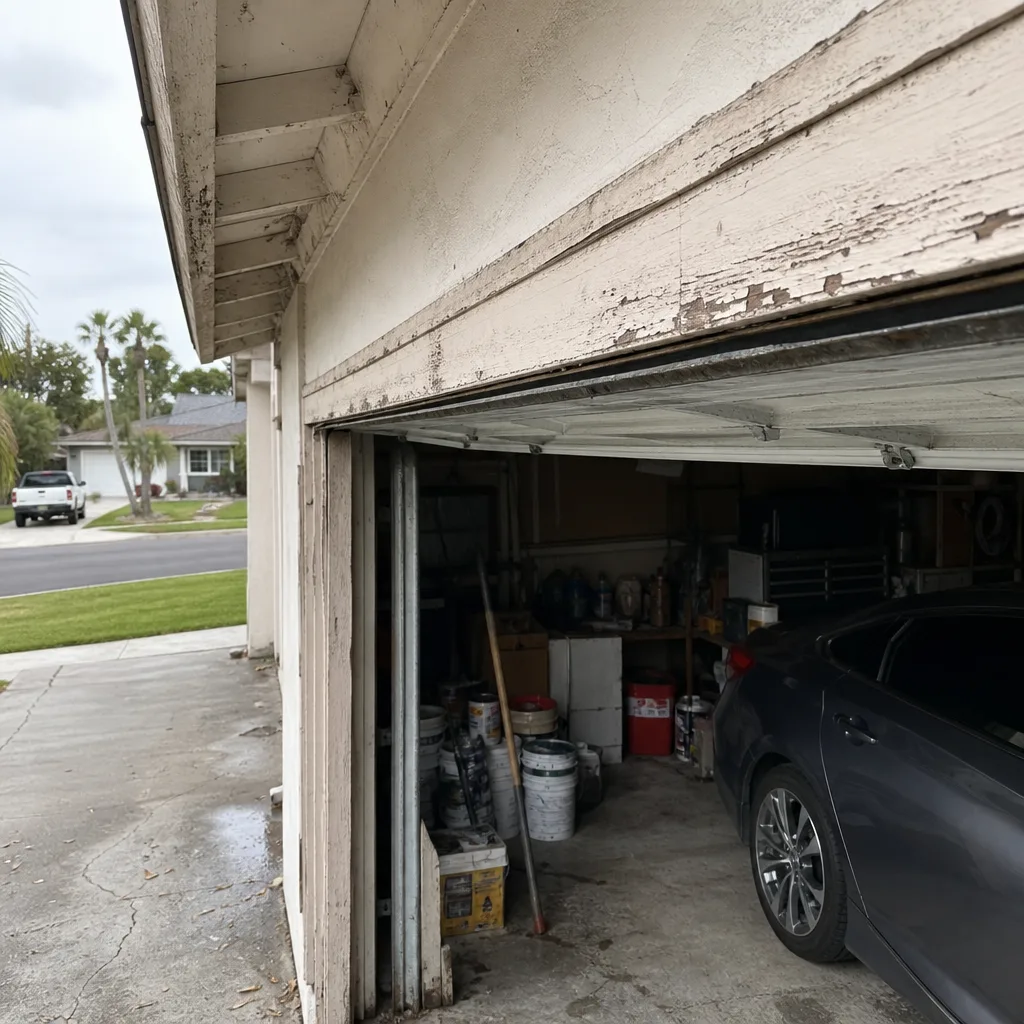 Before
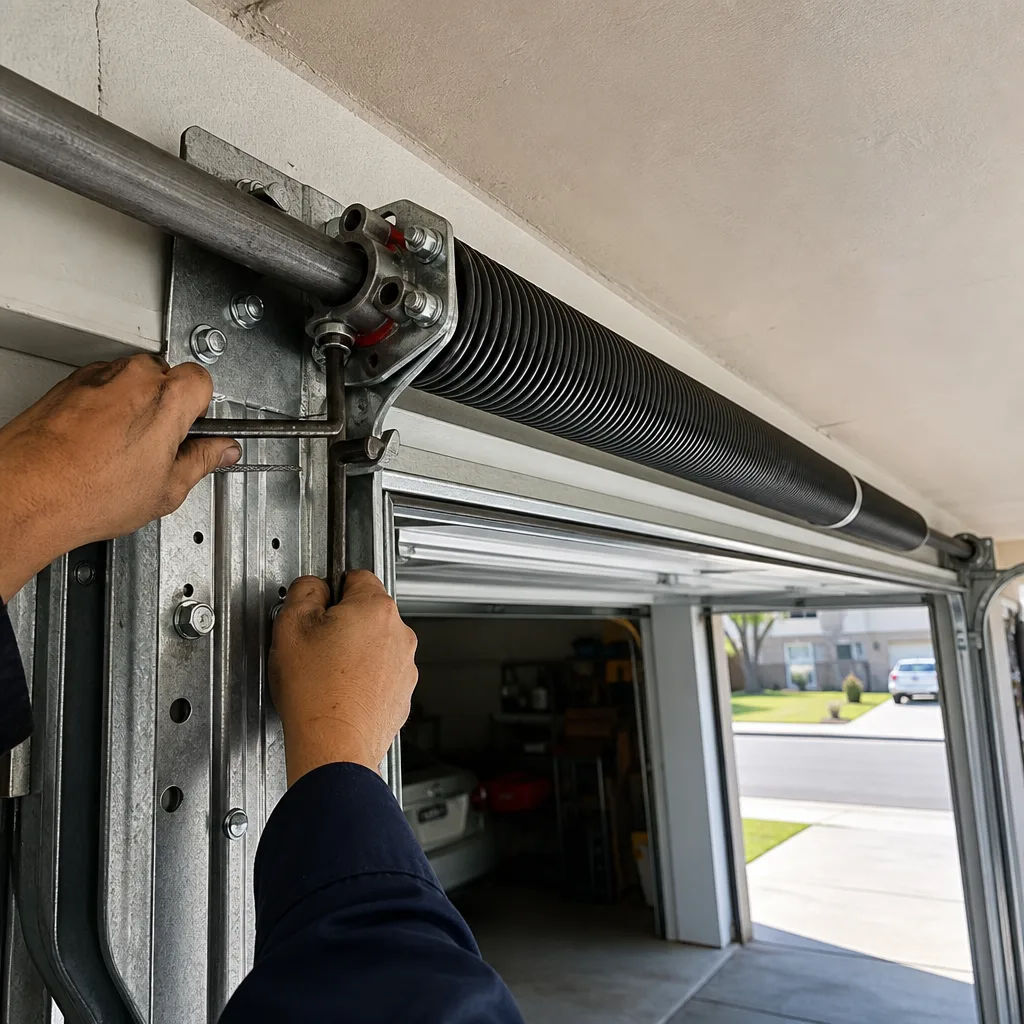 After
After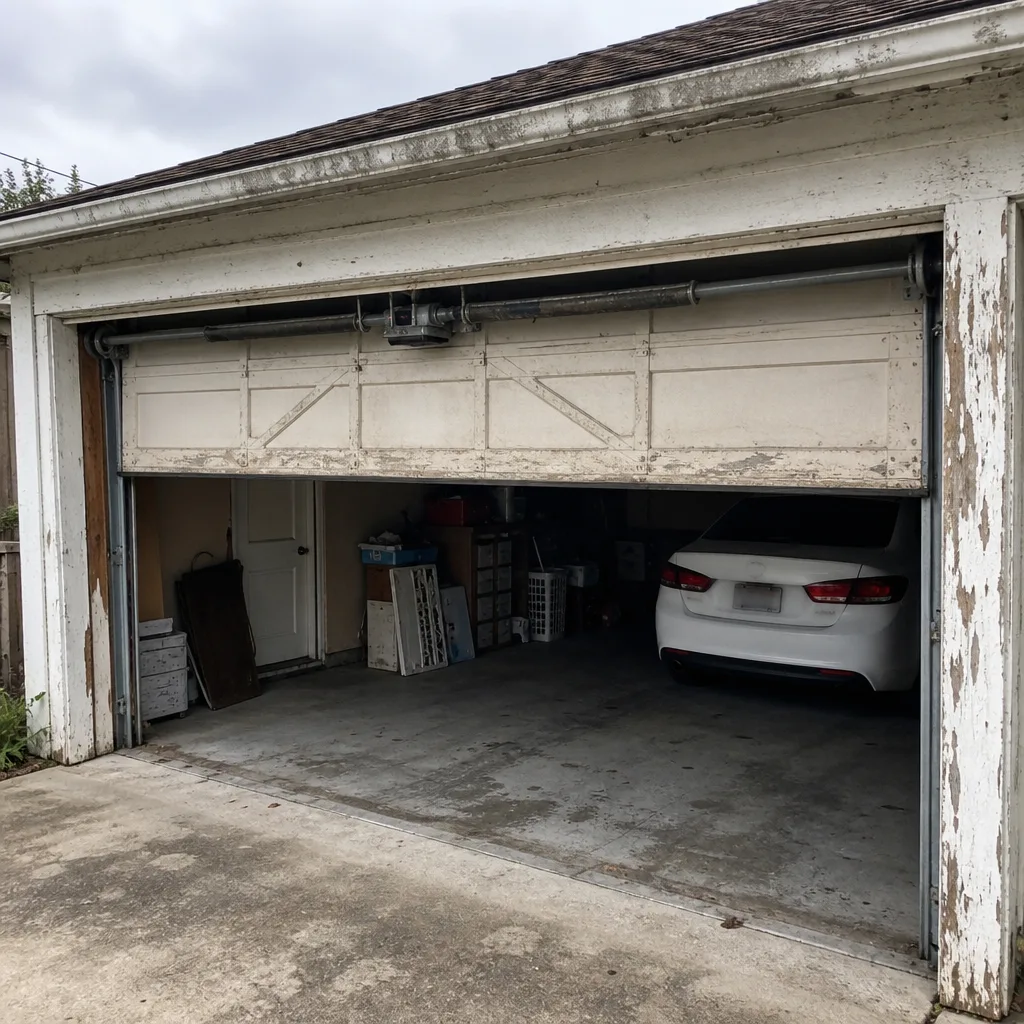 Before
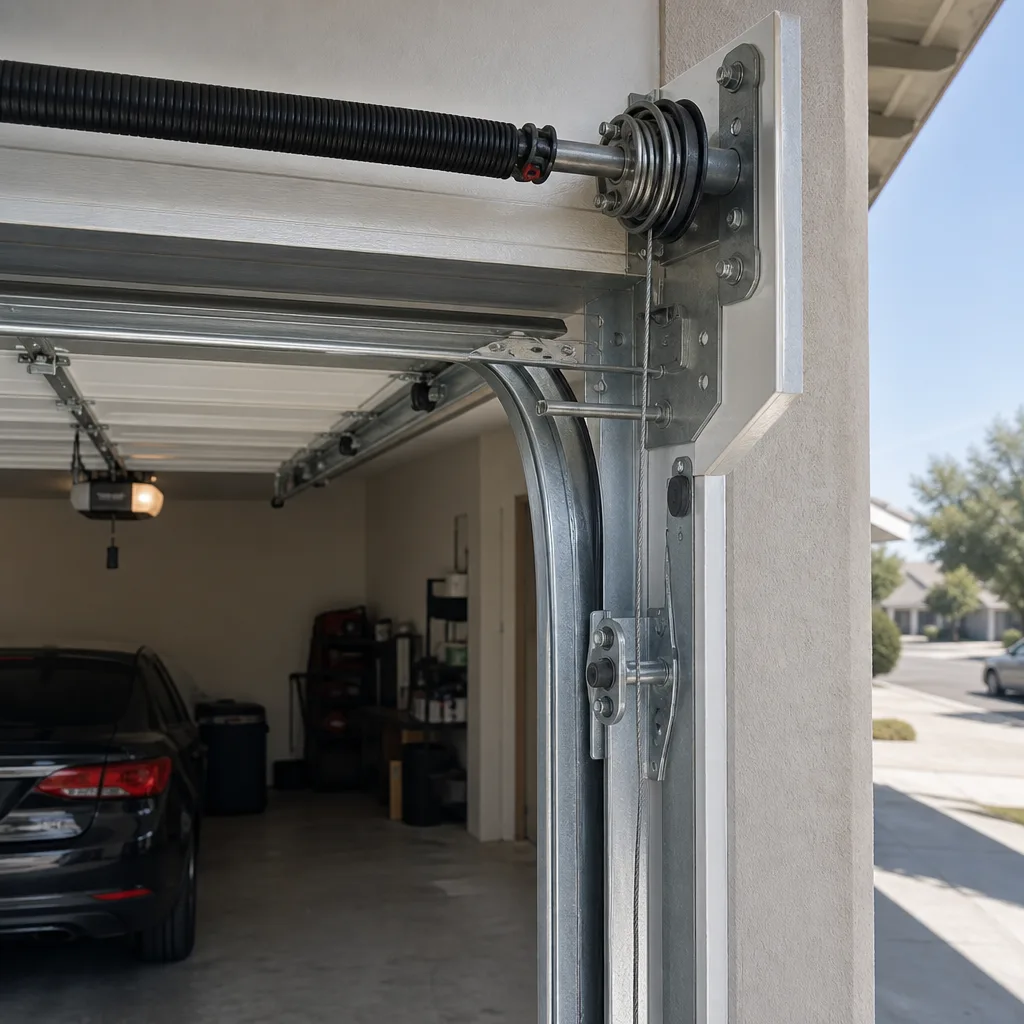 After
AfterSeasonal Garage Door Care for Santa Ana: Year-Round Homeowner’s Guide
The season that damages Santa Ana garage doors most is not winter. It is the Santa Ana wind season, when grit-laden air scours lubrication from rollers and temperature swings of 30 degrees in a single day stress every metal component. Most seasonal maintenance guides written for the Midwest or Northeast are useless here because they assume snow load, freeze-thaw cycles, and a four-season calendar that Santa Ana simply does not follow. In The Complete Guide to Garage Door in Santa Ana, we will walk through Santa Ana’s actual climate phases, the specific damage each one causes, and what to do about it. You will learn why a spring calibrated in January may be dangerously overtightened by August, why the marine layer is harder on steel hardware than rain, and the single annual inspection that prevents most warm-weather emergency calls we receive in neighborhoods from Floral Park to South Coast Metro.
Quick Answer
Santa Ana garage doors need phase-based maintenance aligned with three local climate periods: the Santa Ana wind season (October through March), the marine-layer months (May through July), and the dry-heat stretch (August through October). Homeowners should perform a post-wind-event inspection, lubricate moving parts with silicone-based grease before summer heat alters spring tension, and schedule a professional cable-and-drum inspection once yearly. This approach prevents the corrosion, hardware fatigue, and spring failures that account for the majority of service calls in Orange County.
Table of Contents
- Understanding Santa Ana’s Three Climate Phases
- The Santa Ana Wind Season: October Through March
- The Marine-Layer Months: May Through July
- The Dry-Heat Stretch: August Through October
- The Annual Cable and Drum Inspection
- What Homeowners Can Safely Do Themselves
- Common Mistakes to Avoid
- When to Call a Professional
- Frequently Asked Questions
Understanding Santa Ana’s Three Climate Phases
Generic seasonal advice tells you to winterize in October and tune up in April. That framework works in Chicago or Boston. In Santa Ana, it misses the point entirely.
Our climate operates in three distinct phases, each with its own mechanical signature:
- The Santa Ana wind season brings hot, dry, dust-laden air from the desert, often with gusts above 50 mph. Temperatures can spike 20 to 30 degrees above seasonal norms in hours, then drop just as fast when the winds cease. This thermal whiplash expands and contracts metal components repeatedly.
- The marine-layer months deliver cool, humid air from the Pacific that settles overnight and burns off slowly. Relative humidity climbs above 80 percent regularly, and the moisture lingers on unprotected steel surfaces long after sunrise.
- The dry-heat stretch produces sustained temperatures in the 90s and low 100s with humidity below 20 percent. Garage interiors in Santa Ana can reach 110 to 120 degrees, particularly in west-facing garages in neighborhoods like Washington Square or Heninger Park.
Each phase stresses a different part of the door system. The wind season attacks lubrication and hardware tightness. The marine layer attacks bare metal through corrosion. The dry heat attacks spring temper and opener motor longevity. A maintenance calendar built around these realities will outlast any generic checklist.
We have been tracking failure patterns across Santa Ana since 1984. The data is clear: doors that receive phase-aligned maintenance last 40 to 60 percent longer than those on an arbitrary seasonal schedule. The difference is not the amount of maintenance. It is the timing.
The Santa Ana Wind Season: October Through March
The Santa Ana winds are not merely uncomfortable. They are a mechanical stress event for garage doors, and most homeowners do not realize it until a spring snaps or a door goes off-track.
Here is what actually happens. The winds carry fine particulate matter, dust, and plant debris that infiltrates the track system and grinds against rollers. Simultaneously, the rapid temperature swings cause steel torsion springs to expand and contract through their full thermal range daily. Lubrication that was adequate in September becomes contaminated and thinned by January. Bolts and set screws that were torqued correctly in cool weather loosen as metal cycles through expansion and contraction.
The result is a door that operates more noisily, vibrates more, and places uneven loads on its hardware. We see the aftermath every February and March in Santa Ana: cables off drums, bent tracks from debris impact, and opener gears stripped from the strain of pulling a binding door.
Post-Wind-Event Inspection Routine
After any significant Santa Ana wind event, perform this five-point check:
- Visual track inspection. Look for dents, debris buildup, or misalignment in the vertical and horizontal track sections. Even a small dent from a flying branch can cause rollers to bind.
- Roller and hinge check. Open and close the door manually (disconnect the opener first). It should move smoothly with no catching or grinding. Listen for metal-on-metal noise that indicates lost lubrication.
- Hardware tightness. Check that roller brackets, track bolts, and opener mounting bolts are snug. Do not over-tighten; finger-tight plus a quarter turn with a wrench is sufficient.
- Weather seal inspection. The bottom seal compresses against grit and loses its shape. Look for cracking, flattening, or gaps that allow wind-driven dust to enter the garage.
- Spring and cable visual check. Look for gaps in the torsion spring coils, fraying in lift cables, or rust spots. Do not touch or adjust springs. If you see damage, stop and call a professional.
We recommend silicone-based lubricant for Santa Ana wind season maintenance. It resists dust adhesion better than petroleum-based greases, which attract grit and form an abrasive paste. Apply sparingly to rollers, hinges, and bearing plates. Never lubricate the track itself; the rollers need friction to roll, not slide.
For doors in exposed locations, particularly in the hills above Santa Ana or near open construction sites, consider increasing inspection frequency to monthly during peak wind months. The 15 minutes spent is cheaper than any repair.
The Marine-Layer Months: May Through July
The marine layer is Santa Ana’s most underestimated garage door hazard. It does not look threatening. There are no dramatic wind events, no triple-digit temperatures. But the sustained humidity, particularly in the early morning hours, creates corrosion conditions that accelerate hardware degradation by years.
Here is the mechanism. Cool, moist air settles into garages overnight, especially those with poor ventilation or north-facing doors. Bare steel components, hinges, cables, and bottom fixtures condense surface moisture. By mid-morning the sun burns off the fog, but the condensation cycle repeats the next night. Over weeks, this produces oxidation that pitts bearing surfaces and weakens cable strands from the outside in.
We see this pattern consistently in Santa Ana neighborhoods within two miles of the Santa Ana River or near the flood control channels: Delhi, Madison Park, and portions of Memorial Park. Garages with steel doors and no interior finish are particularly vulnerable because the door itself becomes a condensation surface.
Prevention and Materials
The solution is not complex, but it is specific. First, ensure your garage has adequate ventilation, even a small louvered vent, to allow moisture to escape rather than recirculate. Second, inspect hardware for factory coatings. Galvanized hinges and zinc-plated cables resist marine-layer corrosion far better than plain steel. If your door was installed with economy-grade hardware, consider upgrading during your next Garage Door Repair in Santa Ana.
For homeowners replacing a door, the material choice matters in Santa Ana’s coastal-influenced climate. Steel doors with a baked-on polyester or polyurethane finish hold up well. Unfinished wood doors require vigilant resealing. Fiberglass and vinyl composite doors are essentially immune to marine-layer corrosion but can become brittle after years of UV exposure. In our experience, a quality steel door with proper finish and galvanized hardware offers the best longevity for most Santa Ana homes.
During these months, wipe down visible hardware monthly with a dry cloth to remove condensation residue. Check the bottom seal for moisture retention and mildew, which accelerates rubber degradation. If you detect a musty odor in the garage, the humidity level is high enough to threaten metal components.
The Dry-Heat Stretch: August Through October
August in Santa Ana is when garage door springs fail most often. The reason is straightforward metallurgy that most homeowners never encounter until it costs them a service call.
Torsion springs are calibrated to a specific door weight and cycle count at a standard temperature, usually around 70 degrees. When sustained heat raises the garage temperature to 100 degrees or more, the steel expands slightly and the spring’s effective tension increases. A spring that lifted the door perfectly in January is now applying excess force. The door feels heavier to the opener, the cables run at higher tension, and the spring itself accumulates extra stress with every cycle.
More critically, heat accelerates metal fatigue. Each open-close cycle stresses the spring steel; heat multiplies that stress. A spring rated for 10,000 cycles at 70 degrees may reach failure at 7,000 cycles in sustained garage temperatures above 105 degrees. We replace more springs in August and September than in any other two-month period.
What to Watch For
- Door feels heavier or opener strains. The motor labors, or the safety reverse triggers unexpectedly. This often means spring tension has shifted out of spec.
- Visible gap in the torsion spring. A gap between coils indicates a broken spring, even if the door still operates on a two-spring system with one remaining spring.
- Loud bang from the garage. This is the classic spring failure sound. The release of stored energy in a torsion spring is dangerous. Do not attempt to operate the door or repair it yourself.
The safety consideration here is serious. A standard torsion spring for a double-car garage door stores enough energy to cause severe injury or death if handled improperly. We do not provide DIY spring adjustment instructions because the risk is genuine and unnecessary, as covered in our DIY vs Professional Garage Door: The Santa Ana Homeowner’s Decision Guide. A trained technician with proper winding bars and knowledge of door balance can assess and correct spring tension in minutes. The cost of professional service is modest compared to an emergency room visit.
For Garage Door Installation in Santa Ana, we specify springs with a higher cycle rating for west-facing and unventilated garages. A 15,000-cycle spring costs more upfront but eliminates mid-summer failure anxiety. It is a square deal: pay a little more once, or pay for emergency service later.
Opener motors also suffer in dry heat. The logic boards in older Chamberlain and Craftsman units are particularly heat-sensitive. If your garage regularly exceeds 100 degrees, ensure the opener has adequate clearance around the motor housing and consider a thermal shield if the manufacturer allows it. Modern LiftMaster and Genie units handle heat better, but no electronics thrive in sustained oven temperatures.
The Annual Cable and Drum Inspection
There is one maintenance task that prevents more emergency calls in Santa Ana than any other: a professional cable and drum inspection performed every 12 months. We recommend scheduling this in late April, after the wind season and before the dry heat begins.
The cable and drum system is the load path that transfers spring force to the door. When it fails, the door drops hard and fast, often damaging the door sections, the opener, or anything beneath it. The failure is usually not sudden. It announces itself through gradual wear that a trained eye catches early.
What the Inspection Covers
- Cable condition. We examine the full cable length for fraying, kinking, rust spots, and broken strands. A single broken strand is an early warning; multiple strands mean replacement is urgent.
- Drum alignment and wear. The cable must wind evenly on the drum. Grooves worn off-center or flanges deformed from misalignment cause the cable to slip or bind.
- Bottom fixture integrity. The cable attaches to the bottom of the door through a stamped steel bracket. Cracks here are catastrophic if they propagate.
- Door balance verification. With the opener disconnected, the door should stay at any height between fully open and fully closed. Drift indicates spring or cable issues.
- Safety reverse test. The opener must reverse when encountering resistance. We test this with a calibrated force gauge, not a 2×4.
In our 42 years of service, we have found that homeowners who maintain this annual rhythm experience fewer than half the emergency calls of those who wait for visible failure. The inspection takes 30 to 45 minutes. Our $89 Seasonal Tune-Up includes the full cable-and-drum inspection plus lubrication and safety testing; see our Garage Door Cost Breakdown: The Santa Ana Homeowner’s Reference for 2026 for full pricing details. For seniors and veterans, the permanent 5% discount applies.
The neighborhoods where we perform the most spring and cable replacements, places like Artesia Pilar and Lacy, are also the neighborhoods where we see the lowest rate of annual maintenance. The correlation is not coincidental.
What Homeowners Can Safely Do Themselves
There is honest work a homeowner can perform without risk. There is also work that belongs to a trained technician. The line is clear if you respect the danger of stored mechanical energy.
Safe Monthly Tasks
- Visual inspection of tracks, rollers, hinges, and cables from a safe distance
- Lubrication of rollers, hinges, and bearing plates with silicone-based spray
- Cleaning of photo-eye sensors with a soft cloth
- Testing of safety reverse by placing a solid object in the door path
- Listening for unusual noises during operation and noting when they started
Tasks for a Professional Only
- Torsion spring adjustment, repair, or replacement
- Cable replacement or drum repositioning
- Track realignment after impact or wind damage
- Opener force limit adjustment
- Bottom bracket or hinge replacement on a tensioned door
The K.E.Y.S. values code our technicians follow includes “Your home first.” That means we will tell you honestly what you can do yourself and what requires our tools and training. We do not invent work. The 90-Day Done Right Promise applies to everything we touch, but it only applies if we do the work. A DIY spring adjustment gone wrong is not our call to make right.
For Garage Door Opener in Santa Ana concerns, many issues are simple: dead remote batteries, misaligned photo eyes, or travel limit switches knocked out of position. We will walk a homeowner through these checks by phone if they call. Our live answer policy means a real person picks up, including evenings and weekends, and can determine quickly whether you need a dispatch or just guidance.
Common Mistakes to Avoid
- Using WD-40 as a lubricant. WD-40 is a solvent and water displacer, not a lubricant. It strips existing grease and leaves a residue that attracts dust. In Santa Ana’s wind season, this creates abrasive paste on rollers. Use silicone-based or lithium-based garage door lubricant only.
- Ignoring the door after a wind event. Many Santa Ana homeowners check their roof and yard after Santa Ana winds but never think about the garage door. The same winds that down branches dent tracks and loosen hardware. A two-minute visual inspection prevents a weekend emergency.
- Adjusting spring tension with improvised tools. We have seen winding bars made from screwdriver shafts, adjustable wrenches, and steel pipe. Each is a recipe for injury. Torsion spring adjustment requires solid steel winding bars inserted fully into the cogs. Anything else can slip and release stored energy unpredictably.
- Assuming a noisy door just needs lubrication. Grinding or squealing often indicates worn rollers, bent tracks, or failing bearings. Lubrication masks the symptom briefly while the underlying damage progresses. If noise persists after proper lubrication, the door needs professional diagnosis.
- Neglecting ventilation in marine-layer months. Sealing a garage tightly to save energy traps moisture against steel components. A small vent or periodic air circulation prevents the condensation cycle that corrodes hardware.
- Calibrating spring tension in cold weather without summer recheck. A door balanced at 60 degrees in January may be dangerously tight at 105 degrees in August. If you had spring work done in winter, request a mid-summer balance check, particularly for west-facing garages in Santa Ana.
- Waiting for complete failure before calling. A frayed cable, a gap in a spring, or a door that reverses unpredictably are all pre-failure warnings. The cost of scheduled service is always lower than emergency repair, and you choose the timing.
When to Call a Professional
Call a technician when you observe any of the following: a visible gap in a torsion spring, frayed or separated cable strands, a door that falls rapidly or will not stay open, an opener that strains or overheats, or any damage to tracks or hardware after a wind event. These are not maintenance items. They are safety concerns.
We also recommend professional service when your door reaches 15 years of age, even if it appears to function well. Springs, cables, and rollers have finite lifespans. Proactive replacement of worn components before failure is the definition of a square deal: you pay once on your schedule, not twice on an emergency basis.
Mainspring Garage Door Co. offers free estimates in Santa Ana. A technician will inspect your door, explain what we find, and state a flat price before any work begins. There are no surprises on the bill. Call (562) 245-4879 to schedule. If you have a written estimate from another company, we provide a Free Second Opinion. Our trucks carry springs, cables, and openers for all major brands, including Raynor, LiftMaster, and Chamberlain, so most jobs are completed in a single visit.
Frequently Asked Questions
Once yearly is sufficient for most Santa Ana homes, with a cable-and-drum inspection in late spring. Homes in high-wind exposure areas or within two miles of the coast should consider biannual service. Call (562) 245-4879 for an exact recommendation based on your door’s age and location.
Yes, monthly lubrication is safe homeowner maintenance. Use a silicone-based or lithium-based garage door lubricant, not WD-40. Apply sparingly to rollers, hinges, and bearing plates. Avoid the track, springs, and plastic components. If the door remains noisy after lubrication, the underlying issue requires professional diagnosis.
Heat expands steel and increases spring tension beyond its calibrated specification. A spring balanced at 70 degrees applies excess force at 100+ degrees, accelerating metal fatigue. Sustained garage temperatures above 105 degrees can reduce a spring’s cycle life by 30 percent or more. Higher-cycle springs or improved garage ventilation mitigate this.
Perform a five-point inspection: check tracks for dents or debris, operate the door manually to listen for grinding, verify hardware tightness, inspect the bottom seal for damage, and visually examine springs and cables for wear. If you find damage, do not operate the door. Call for professional assessment.
Our $89 Seasonal Tune-Up includes full cable-and-drum inspection, lubrication, safety testing, and hardware tightening. Repairs, if needed, are quoted upfront before any work begins. Seniors and veterans receive a permanent 5% discount. Call (562) 245-4879 for a free estimate on any needed repairs.
No. Mainspring states the flat price before any work begins. If our inspection reveals additional issues, we explain them and quote separately. You approve every dollar before we proceed. The price on the invoice matches the price you agreed to. That is how we have operated since 1984.
The Bottom Line
Santa Ana’s garage doors face three distinct climate adversaries: scouring winds, corrosive marine moisture, and heat-accelerated metal fatigue. Generic seasonal advice fails here because it addresses problems this climate does not create while ignoring the ones it does. For more guides & resources tailored to Santa Ana homeowners, visit our blog. The homeowners who sleep easiest are those who align maintenance with actual local conditions, perform post-wind inspections without fail, and schedule a professional cable-and-drum inspection annually. The cost of prevention is modest. The cost of emergency repair, or worse, injury from a failed component, is not. We have been serving Santa Ana since 1984 with upfront pricing, stocked trucks, and a 90-Day Done Right Promise in writing. When you are ready for maintenance that matches where you actually live, we will be here.
Written by Carl Dutton, Owner at Mainspring Garage Door Co., serving Santa Ana since 2016.