
Last updated September 10, 2026
Full 25-point door and opener safety check with every visit - springs, cables, rollers, tracks, and your LiftMaster or Chamberlain opener included
You get a price before we start. It does not change when the truck arrives.
 Before
 After
After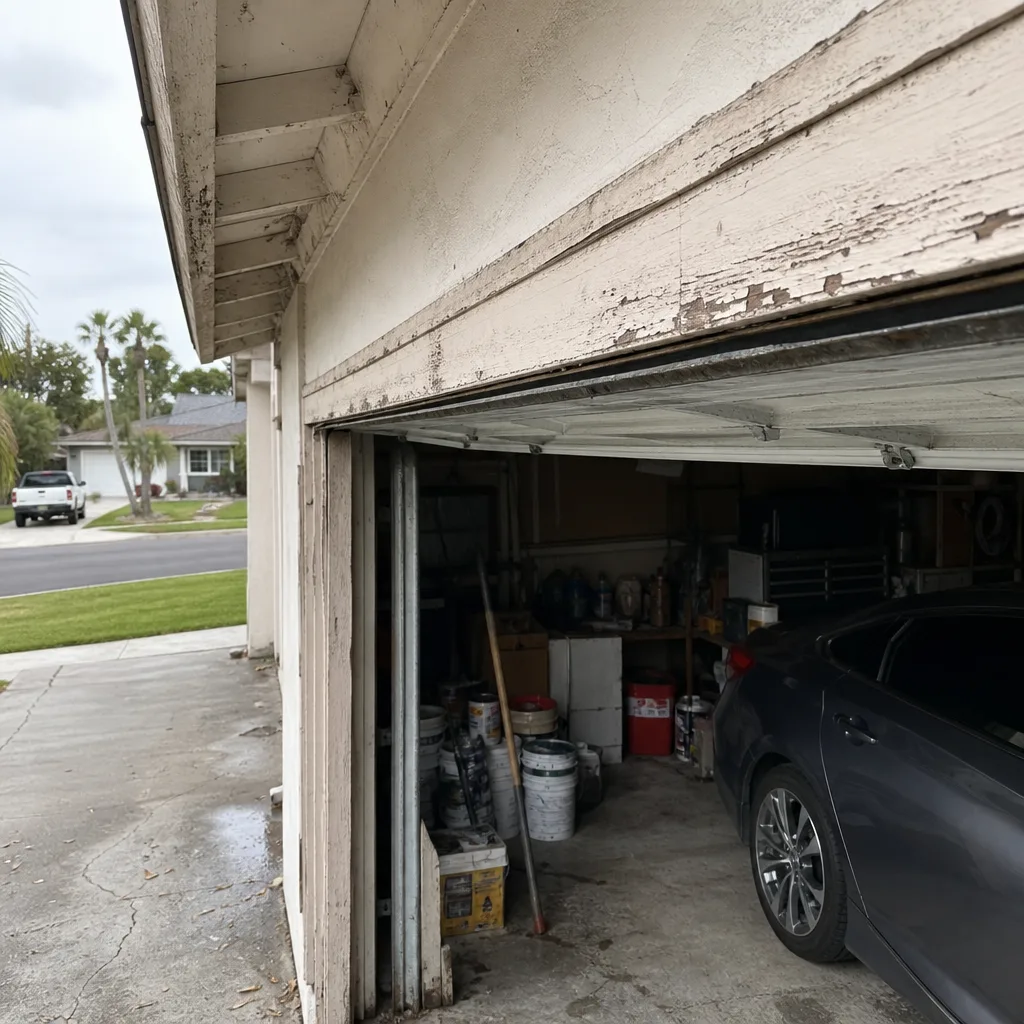 Before
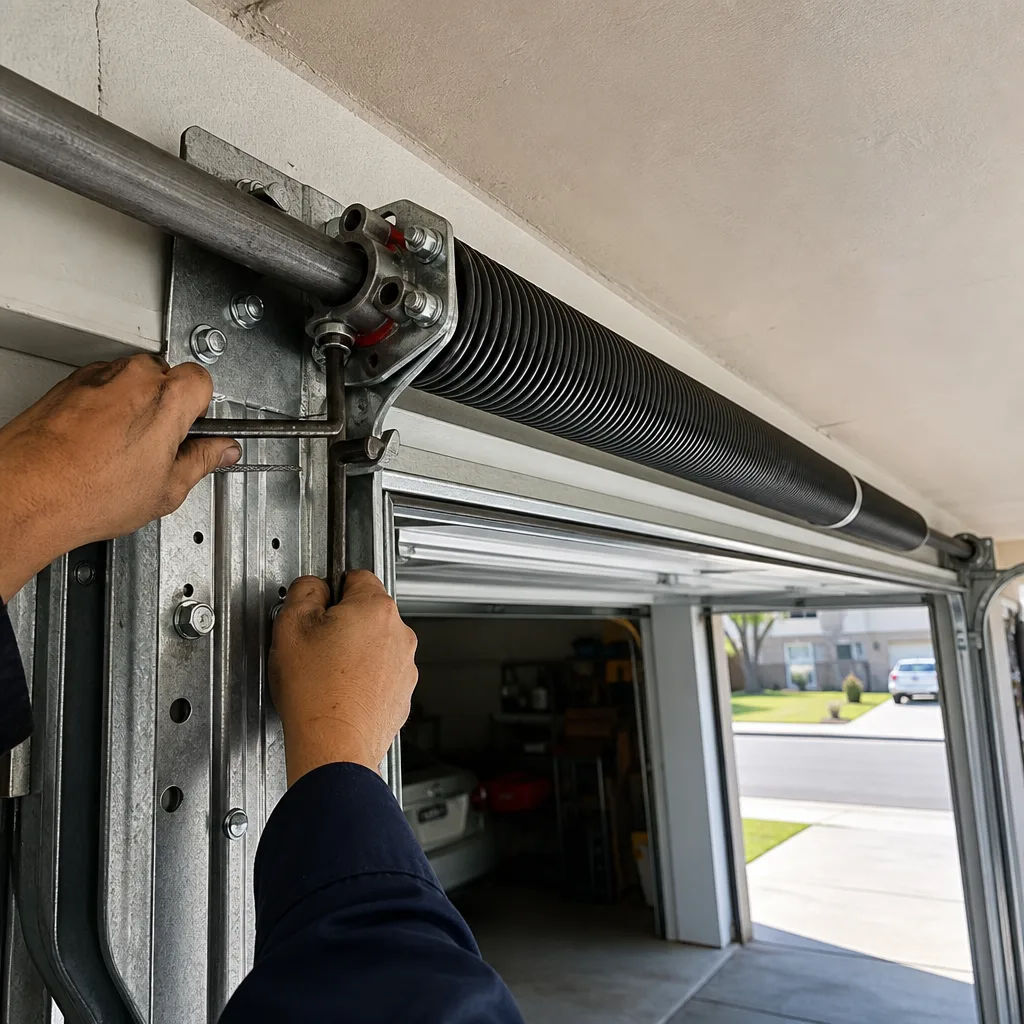 After
After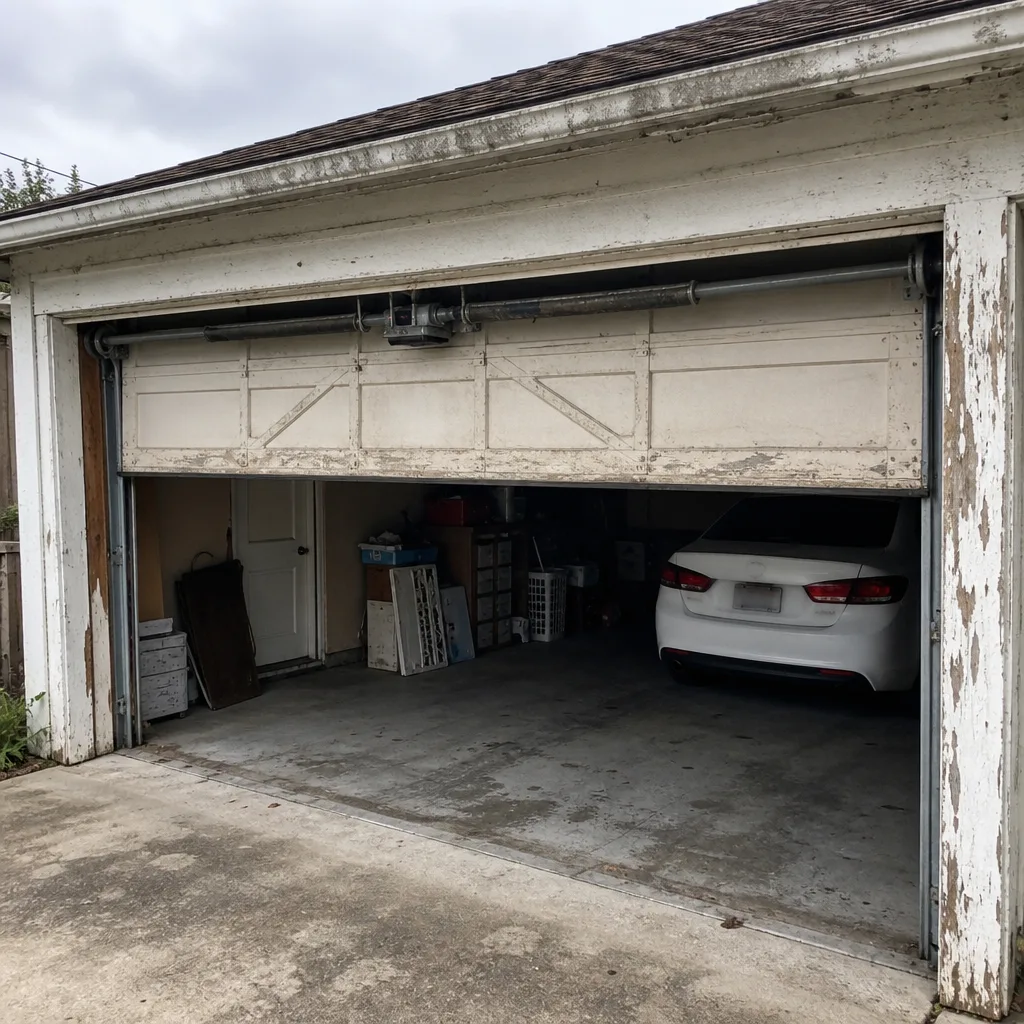 Before
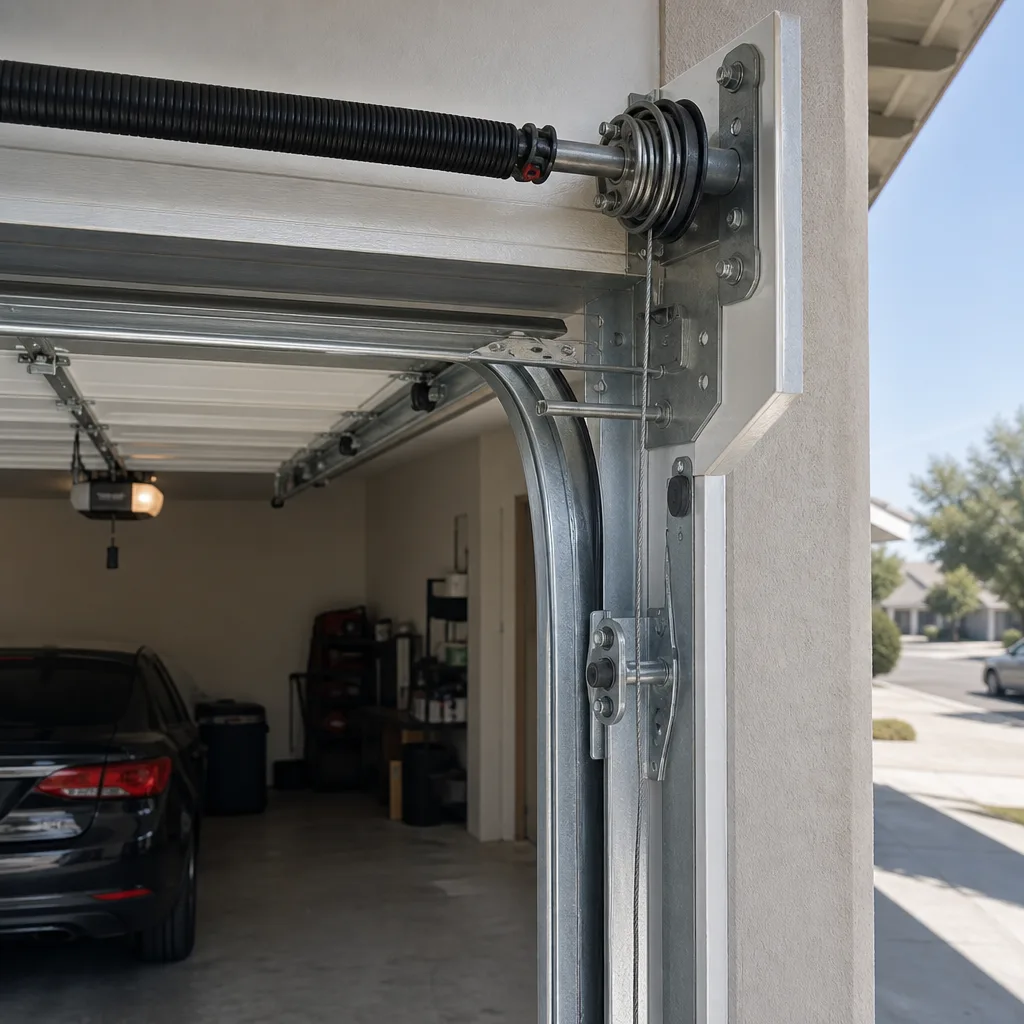 After
AfterGarage Door Warning Signs: A Santa Ana Homeowner’s Reference Guide
A grinding noise and a scraping noise are not the same thing, and confusing them is the single most common reason a Santa Ana homeowner waits too long to call. In our 42 years serving this city, we’ve seen a $180 cable repair become a $600 door replacement because someone kept operating a door that was screaming for help. Most garage door failures announce themselves weeks in advance through sound, sight, and movement changes that go unnoticed or misinterpreted. This guide will teach you to read those signals correctly, know which ones mean stop using the door today, and avoid the expensive mistake of forcing a struggling door to move. For The Complete Guide to Garage Door in Santa Ana, see our broader overview.
Quick Answer
Garage door warning signs fall into three categories: sound changes (grinding, popping, rattling), visual changes (sagging, gaps, fraying cables), and performance changes (slow operation, uneven movement, incomplete closing). In Santa Ana’s dry climate, springs typically show tension loss before they break, and rollers degrade faster from dust and heat. Stop using the door immediately if you see a frayed cable, a broken spring, or the door hanging at an angle.
Table of Contents
- A Sound-by-Sound Guide to Garage Door Problems
- Visual Warning Signs Sorted by Urgency
- Spring Tension Loss vs. Cable Fraying: How to Tell Them Apart
- The Warning Sign Most Homeowners Miss: Slow Cycle Time
- What to Do (and Not Do) When a Warning Sign Appears
- How Santa Ana’s Climate Affects Your Garage Door
- A Seasonal Maintenance Schedule for Santa Ana Homes
- Common Mistakes to Avoid
- When to Call a Professional
- Frequently Asked Questions
A Sound-by-Sound Guide to Garage Door Problems
Your garage door produces a signature sound in normal operation. When that sound changes, the change itself is the warning. Here is what we hear on service calls across Santa Ana, from the historic homes around Floral Park to the newer construction in South Coast Metro.
Grinding
Grinding is a low, continuous metal-on-metal sound. It usually means the opener’s main drive gear is stripping, or the trolley is struggling against a door that has become too heavy for the motor. In Santa Ana’s older neighborhoods like Washington Square, we see this often on 1980s-era openers that have been lifting a slowly failing spring for months. The motor compensates until it cannot.
Grinding during manual operation, with the opener disconnected, points to bad rollers or dry track. Steel rollers without ball bearings grind against the track when their shafts wear. Nylon rollers grind when their housings crack and the wheel wobbles.
Action: Stop using the opener. Pull the red emergency release and try lifting the door by hand. If it moves smoothly and stays at waist height, the problem is likely the opener. If it still grinds, the problem is in the door system itself.
Scraping
Scraping is sharper and more intermittent than grinding. It means something is contacting something it should not. Common causes: a bent track section, a loose roller that has shifted in its bracket, or a door panel that has twisted slightly and is rubbing the jamb.
In Santa Ana, we see scraping develop after minor vehicle contact that the homeowner has forgotten. A bumper tap at slow speed can bend the bottom of a track without obvious visual damage. The door continues to run, scraping at one point in the cycle.
Action: Inspect the track from inside the garage with the door closed. Look for bright metal where paint has been worn away. That mark shows you exactly where contact is happening.
Popping
A single loud pop, especially when the door begins moving or changes direction, is almost always a failing spring. Extension springs pop when a coil breaks and the spring snaps against itself. Torsion springs pop when a section of the coil fractures and the remaining spring lurches to compensate.
After the pop, the door may still operate. The opener strains, or one side lifts faster than the other. This is the dangerous interval. A torsion spring with a broken section carries uneven tension and can unwind catastrophically if disturbed.
Safety note: Torsion springs are under extreme tension and can cause serious injury or death if handled improperly. Do not attempt to adjust, repair, or remove a torsion spring. This work requires specialized tools and training.
Rattling
Rattling is the sound of something loose. The most common culprits: loose nuts on roller brackets, loose hinges between door sections, or a chain/belt drive opener with excessive slack. In Santa Ana, the thermal cycling between hot days and cool nights works hardware loose over years.
A specific rattle to note: the sound of a roller bouncing in a worn track. This means the roller stem has worn smaller than the bracket hole, or the track itself has spread at a joint. The door still moves, but each cycle worsens the wear.
Squealing
Squealing is friction. It usually means dry rollers, dry hinges, or a dry opener rail. It is the least urgent sound on this list, but it is not harmless. Dry steel rollers wear faster. Dry hinges stress the door sections they connect. And squealing that gradually becomes grinding means the lubrication need has progressed to mechanical damage.
What to lubricate: Hinge pins, roller bearings (not the track), and the opener rail. Use a silicone-based garage door lubricant, not WD-40, which attracts dust in Santa Ana’s dry, dusty environment.
Visual Warning Signs Sorted by Urgency
Some problems you can monitor. Others mean stop using the door now. We sort them by what action they require.
Watch and Wait (Schedule Service Within Two Weeks)
- Faded or chalking paint on door panels: Cosmetic only, but exposed steel will rust. Santa Ana’s strong sun degrades paint faster than coastal cities.
- Minor rust spots on hardware: Surface rust on hinges or brackets. Clean and touch up before it progresses.
- Weatherstrip hardening or cracking: The rubber seal at the bottom of the door. Replacement is routine maintenance.
- Slight opener light flicker: Often a loose bulb or failing logic board capacitor. Annoying, not urgent.
Same-Week Service Needed
- Door visibly sagging when open: Indicates spring tension loss or a bent track. The door is not properly supported.
- Gap between door bottom and floor on one side: Usually a cable length issue or a door that has shifted on its lift hardware. Allows pest entry and reduces security.
- Opener straining or reversing: The motor detects excessive resistance. Could be a spring problem, track obstruction, or failing opener. Continuing to operate it risks motor burnout.
- Remote working intermittently: Often a failing logic board or antenna issue, but verify by testing the wall button first.
Stop Using the Door Today
- Frayed or unwinding cable: A cable under tension that breaks can whip with lethal force. We have replaced cables in Santa Ana homes where the homeowner heard a ticking sound for weeks before failure. That ticking was individual strands breaking.
- Broken spring (any visible gap in coil): The door is no longer counterbalanced. Operating it stresses the opener, cables, and door panels. A 16-foot door can weigh 200 pounds or more.
- Door hanging at an angle: One side is lifting, one is not. This means a cable has failed or a spring has broken on one side. Continued operation will twist the door and damage panels.
- Door free-falling or slamming closed: Complete spring failure. The opener or your arm is now the only thing controlling a heavy door.
- Visible track separation from wall or ceiling mount: The door’s path is compromised. A derailment can damage the door, vehicle, or person nearby.
Spring Tension Loss vs. Cable Fraying: How to Tell Them Apart
These two problems produce similar symptoms, and confusing them leads homeowners to describe the wrong issue when they call. Here is how to distinguish them before you pick up the phone.
Spring Tension Loss
A spring that is losing tension but has not yet broken will show these signs:
- The door feels heavy when lifted manually. A properly balanced door should stay at any position between fully open and fully closed. A door with weak springs will drift downward from waist height.
- The opener strains more than it used to, especially at the start of the open cycle. You may notice the opener light dimming slightly as the motor works harder.
- The door opens more slowly than it did six months ago. Not dramatically, but noticeably.
- The door does not stay fully open without the opener holding it. In extreme cases, it may creep closed on its own.
In Santa Ana, we see accelerated spring wear in west-facing garages where afternoon heat builds to 120°F or more. Heat cycling fatigues steel faster than constant temperature. If your garage faces west and your door is ten years old, assume the springs are near end of life even if they have not broken.
Cable Fraying
A fraying cable produces a different set of indicators:
- The door drifts to one side during operation. One cable is maintaining tension while the other is stretching or slipping.
- One side of the door sits higher than the other when fully open. The shorter cable is pulling that side up farther.
- You see broken wire strands at the cable drum or bottom bracket. Even a few visible strands mean the cable is compromised.
- A rhythmic ticking or pinging sound during operation. This is individual strands breaking under load.
Cables fail faster in Santa Ana’s dry climate because dust works into the strands and acts as an abrasive. We see this particularly in homes near the Santa Ana River bed where fine dust is more prevalent.
The Key Difference
Spring problems affect both sides of the door equally. Cable problems affect one side more than the other. If the door is slow and heavy but level, suspect springs. If the door is crooked or drifting sideways, suspect cables.
Both problems require professional repair. Springs must be wound to the correct torque for the door weight. Cables must be matched in length and installed with proper drum winding. Neither is a do-it-yourself repair.
The Warning Sign Most Homeowners Miss: Slow Cycle Time
This is the one that slips past almost everyone. The door opens and closes smoothly. No strange sounds. No visible problems. But it takes longer to complete a full cycle than it used to.
Most residential garage doors open at 7 inches per second, completing a full cycle in 12 to 15 seconds. When cycle time extends to 20 seconds or more without the owner noticing, it means the opener is compensating for a mechanical problem elsewhere in the system.
What Slow Cycle Time Indicates
The opener’s force settings are doing hidden work. A door that has become heavier due to spring fatigue triggers the opener’s force adjustment. The motor runs longer at reduced speed to avoid tripping the safety reverse. The door still moves, but the opener is operating outside its design parameters.
This hidden strain produces three consequences:
- Premature opener failure: The motor and drive gear wear faster under sustained load. We replace many openers in Santa Ana that could have lasted years longer if the underlying spring problem had been addressed.
- False safety reverse triggering: As the opener works harder, it may interpret normal resistance as an obstruction and reverse unexpectedly. This is particularly dangerous if it happens while the door is descending.
- Eventual complete failure: The opener fails entirely, often at the worst moment, leaving the door inoperable.
How to Check Your Cycle Time
- Stand inside the garage with the door fully closed.
- Press the wall button and count seconds until the door is fully open.
- Press again and count seconds until fully closed.
- Compare to your memory of six months or a year ago. If the total cycle has increased by 5 seconds or more, something has changed mechanically.
In our experience across Santa Ana, from the condo conversions in Downtown to the single-family homes in Tustin Legacy-adjacent areas, homeowners who catch slow cycle time early avoid both opener replacement and the emergency call when the system fails completely. For How to Hire a Garage Door Contractor in Santa Ana: A Step-by-Step Guide, see what to ask before scheduling service.
What to Do (and Not Do) When a Warning Sign Appears
Immediate Steps for Any Warning Sign
- Stop operating the door if you see frayed cables, broken springs, or a crooked door. These are not problems that improve with use.
- Disconnect the opener. Pull the red emergency release handle. This allows manual operation if needed and prevents the opener from worsening a mechanical problem.
- Inspect visually from inside the garage. Look at springs, cables, rollers, and track. Do not touch springs or cables.
- Test balance if the door appears safe to move manually. Lift to waist height and release. A balanced door stays put. A falling door has spring problems.
- Call for assessment. Describe what you see and hear. A competent company can often diagnose over the phone and arrive with correct parts.
What Not to Do
Do not force a struggling door. This is the fastest way to turn a $200 repair into a $600 one. When a door resists movement, something is binding or failing. Applying more force damages the opener, bends track, twists door panels, or causes cable or spring failure. We have replaced entire door systems in Santa Ana because a homeowner repeatedly hit the opener button on a binding door until the opener stripped its gears and the door derailed.
Do not adjust spring tension yourself. Torsion springs store enough energy to cause serious injury. The winding bars must be the correct size, inserted properly, and handled with knowledge of how torque releases. Every year, emergency rooms treat homeowners who attempted this.
Do not ignore a change because the door still works. “It still opens” is the phrase we hear most often before a major failure. The door is warning you precisely because it still works. Once it stops working, the repair is usually more extensive.
Do not lubricate a frayed cable or cracked spring. Lubrication is for moving parts in good condition. Applying lubricant to damaged components masks symptoms temporarily and can make proper diagnosis harder for the technician.
How Santa Ana’s Climate Affects Your Garage Door
Santa Ana’s specific climate conditions create predictable wear patterns that homeowners should factor into their maintenance expectations. Our Seasonal Garage Door Care for Santa Ana: Year-Round Homeowner’s Guide breaks down what to watch each season.
Heat and Thermal Cycling
Santa Ana summer temperatures regularly exceed 90°F, and west-facing garage interiors can reach 120°F. Steel springs fatigue faster under thermal cycling than at constant temperature. We recommend more frequent spring inspection for homes in exposed locations, particularly in the hills above Santiago Canyon Road where afternoon sun is most intense.
Dust and Air Quality
The Santa Ana winds carry fine particulate that settles into track, roller bearings, and opener mechanisms. Dust acts as an abrasive and accelerates wear. It also contaminates lubricant, turning it into grinding paste. We see more roller and track wear in Santa Ana than in coastal Orange County cities with less wind-borne dust.
Humidity and Coastal Influence
While Santa Ana is inland, it receives some marine layer influence compared to Riverside or San Bernardino. This means moderate rust risk on unprotected steel hardware, but not the aggressive corrosion seen at the beach. Galvanized components generally last well here; painted steel requires touch-up when paint degrades.
Seismic Considerations
California building codes require garage door bracing and track anchoring that accounts for seismic load. Older Santa Ana homes, particularly pre-1990 construction, may have track mounts that do not meet current standards. We inspect anchoring as part of any service call and can upgrade to code-compliant hardware where needed.
A Seasonal Maintenance Schedule for Santa Ana Homes
Proactive maintenance catches warning signs before they become failures. This schedule is calibrated for Santa Ana’s climate.
Spring (March-May)
- Wash door panels and inspect for paint failure or dent damage.
- Lubricate hinges, roller bearings, and opener rail.
- Test door balance and auto-reverse safety functions.
- Inspect weatherstrip for cracking after winter temperature variation.
Summer (June-August)
- Check spring condition after peak heat exposure begins.
- Inspect opener ventilation; clear dust from motor housing.
- Verify door seals against dust infiltration during Santa Ana wind events.
- Test battery backup if equipped; heat degrades battery life.
Fall (September-November)
- Schedule professional tune-up before holiday garage use increases.
- Inspect track alignment after summer thermal expansion cycles.
- Check remote and keypad battery levels.
- Verify safety sensor alignment; sun angle changes can affect beam path.
Winter (December-February)
- Monitor for moisture intrusion during rare heavy rains.
- Check bottom seal contact with floor; concrete can shift slightly with temperature.
- Test manual release operation; ensure all household members know how to use it.
- Review door operation after any seismic event, however minor.
Our Garage Door Repair in Santa Ana service includes a comprehensive inspection that covers all these points. The $89 Seasonal Tune-Up is designed for this schedule.
Common Mistakes to Avoid
- Assuming a new opener will fix a heavy door. We see this in Santa Ana regularly. The homeowner replaces a “weak” opener twice before discovering the springs were failing. The opener was never the problem.
- Ignoring asymmetry. A door that opens slightly crooked is not “just old.” It is a cable or spring problem in progress. Waiting guarantees a more expensive repair.
- Using the wrong lubricant. WD-40 is a solvent, not a lubricant, and attracts dust. In Santa Ana’s dusty environment, it creates sludge that accelerates wear. Use silicone-based garage door lubricant only.
- Testing the auto-reverse with a rigid object. The safety test requires a soft object like a roll of paper towels. A rigid object can damage the door or opener if the reverse fails.
- Blocking the safety sensors to “fix” a reversing door. Sensors reverse the door for a reason. Bypassing them masks the underlying problem and creates a crushing hazard.
- Assuming all grinding sounds are the same. As this guide details, grinding, scraping, and rattling each indicate different components. Misidentifying the sound sends the technician to the wrong diagnosis.
- Waiting for total failure before calling. The homeowner who calls at the first warning sign gets a repair. The homeowner who waits gets a replacement. In Santa Ana’s competitive housing market, a failed garage door can delay a home sale or rental.
When to Call a Professional
Call when you notice any change in sound, appearance, or operation that you cannot explain. Call immediately for frayed cables, broken springs, crooked doors, or doors that free-fall. Call before the total failure that leaves your car trapped or your home unsecured. Browse our more guides & resources for additional maintenance tips.
When you call, describe specifically what you observe. The sound, the visual symptom, and when it occurs in the cycle. Good information lets us arrive with the right parts, which matters because Mainspring Garage Door Co. home stocks our trucks with springs, cables, rollers, and openers for all major brands. Most repairs are completed in a single visit.
Mainspring Garage Door Co. offers free estimates in Santa Ana. Carl Dutton and our team answer the phone live, 24 hours a day. Call (562) 245-4879.
Frequently Asked Questions
Most common repairs in Santa Ana range from $180 for a cable replacement to $340 for a standard torsion spring replacement. Opener repairs typically fall between $150 and $400 depending on whether the issue is electrical or mechanical. We state the flat price before any work begins, and our $50 Off Any Repair Over $250 applies automatically. Call (562) 245-4879 for an exact quote on your specific problem.
No. Torsion springs are under extreme tension and can cause serious injury or death if handled improperly. The winding and unwinding process requires specialized tools and training. We do not recommend any homeowner attempt spring repair. Our technicians are trained journeymen who handle this work safely every day.
Standard springs are rated for 10,000 cycles, which translates to 7-10 years for typical residential use. In Santa Ana, west-facing garages with extreme heat exposure may see shorter lifespans due to thermal fatigue. High-cycle springs rated for 25,000-50,000 cycles are available and cost-effective for heavily used doors.
The most common causes are misaligned safety sensors, excessive friction in the door system, or opener force settings that have drifted out of adjustment. In Santa Ana, dust accumulation on sensor lenses is a frequent culprit. Clean the lenses with a soft cloth first. If the problem persists, the door may be binding or the opener may need recalibration.
We answer every call with a live person, 24 hours a day, including nights, weekends, and holidays. For emergency situations, a door that is stuck open or closed, we prioritize same-day response throughout Santa Ana. Most repairs are completed in a single visit because our trucks carry the necessary parts.
Yes. Our technicians are factory-familiar with all major brands including Clopay, Amarr, Wayne Dalton, and Craftsman, plus opener manufacturers like LiftMaster, Chamberlain, and Genie. We stock parts for the most common models and can source specialized components when needed. Garage Door Installation in Santa Ana also covers all major brands for replacement doors.
If any repair is not right, we return and make it right at no charge. This is stated in writing on every job. No paperwork to file, no dispute process, no argument. We stand behind our work because we intend to be the company you call for the next repair, and the one after that.
Consider replacement if the door is over 20 years old, has significant panel damage, or requires repairs exceeding half the cost of a new door. Modern doors offer better insulation, quieter operation, and improved safety features. We offer free estimates for both repair and Garage Door Installation in Santa Ana so you can compare options with real numbers.
The Bottom Line
Your garage door speaks before it fails. The grinding sound, the slow cycle, the slight sag, the frayed cable strand, these are not mysteries to decode. They are specific signals from specific components, and learning to read them correctly saves money, prevents emergencies, and keeps your home secure. In Santa Ana’s climate of heat, dust, and thermal cycling, proactive attention matters more than in milder regions. The homeowner who notices early and acts promptly gets a repair. The homeowner who waits for total failure gets a larger bill and a worse day. We have been serving this city since 1984, and we have learned that the best service call is the one that prevents the emergency.
Written by Carl Dutton, Owner at Mainspring Garage Door Co., serving Santa Ana since 2016.