
Last updated September 10, 2026
Full 25-point door and opener safety check with every visit - springs, cables, rollers, tracks, and your LiftMaster or Chamberlain opener included
You get a price before we start. It does not change when the truck arrives.
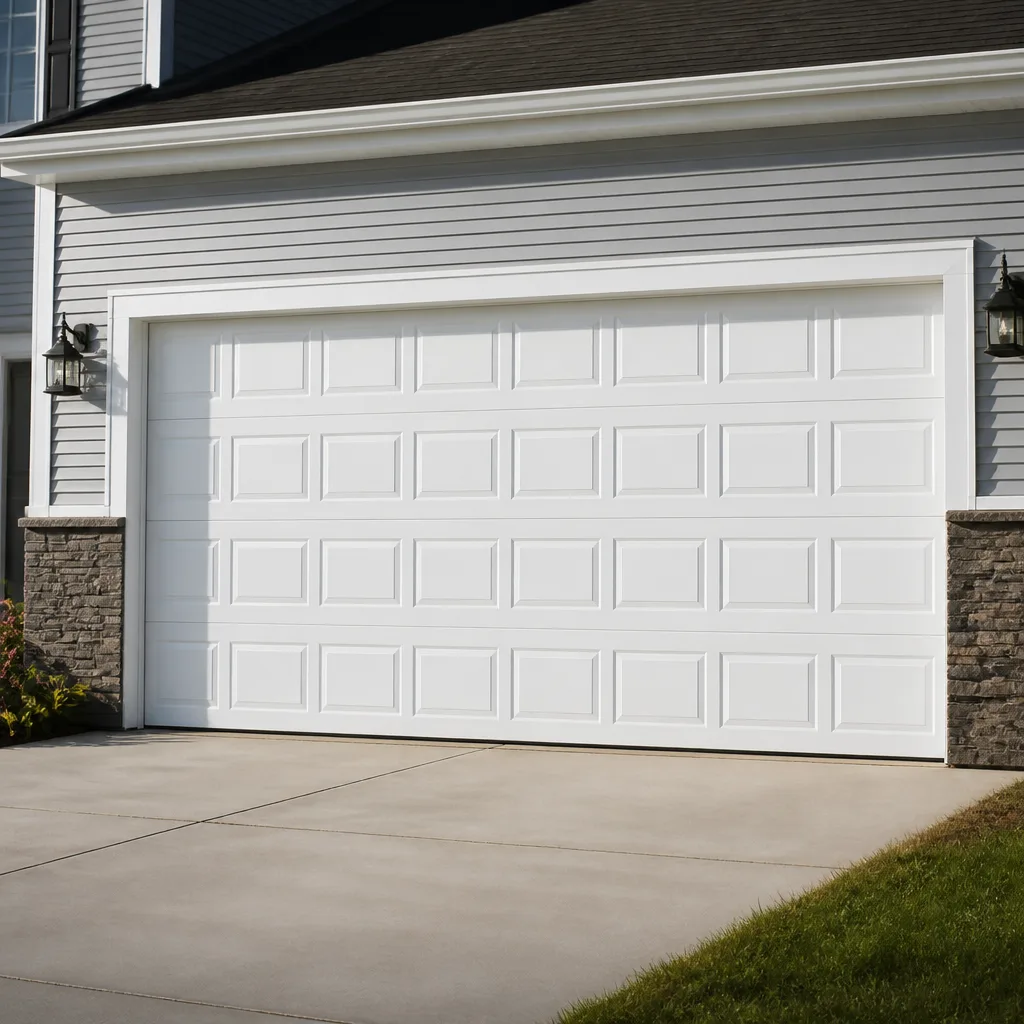
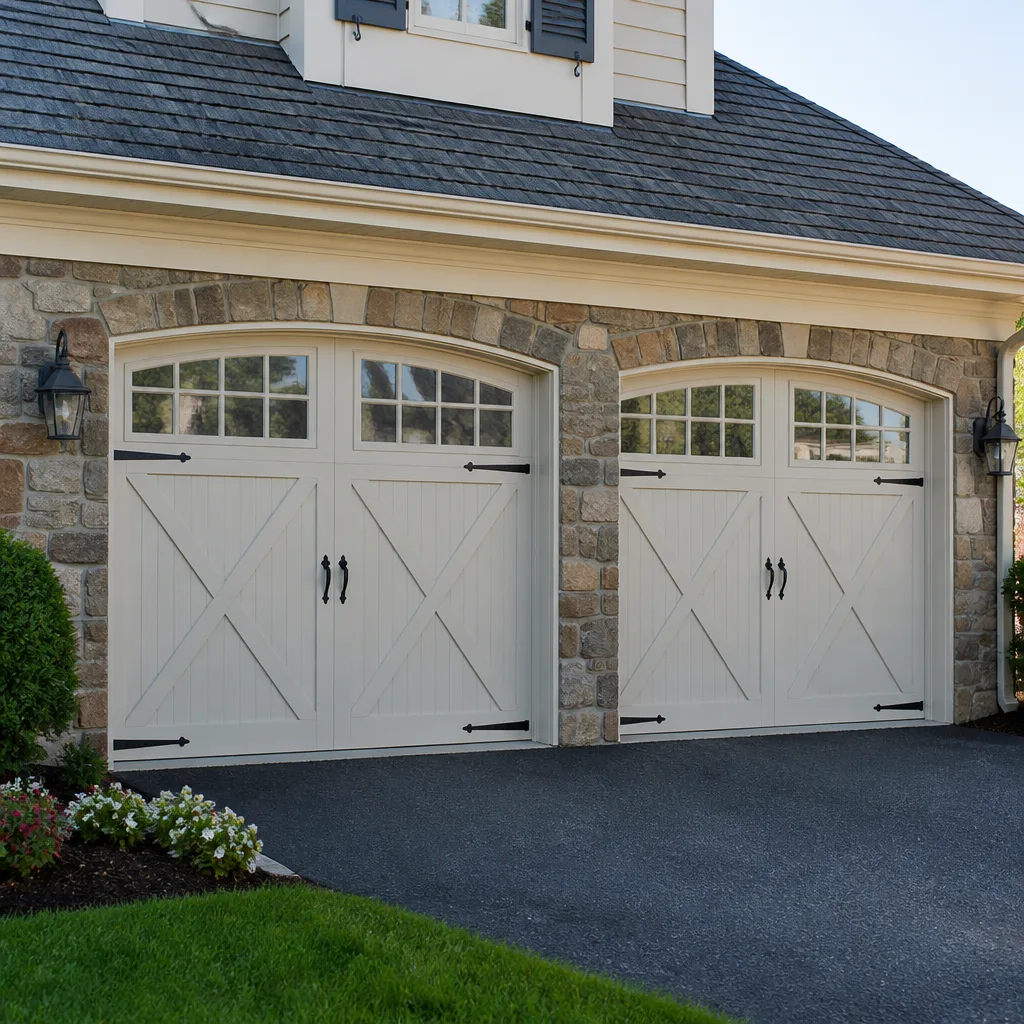
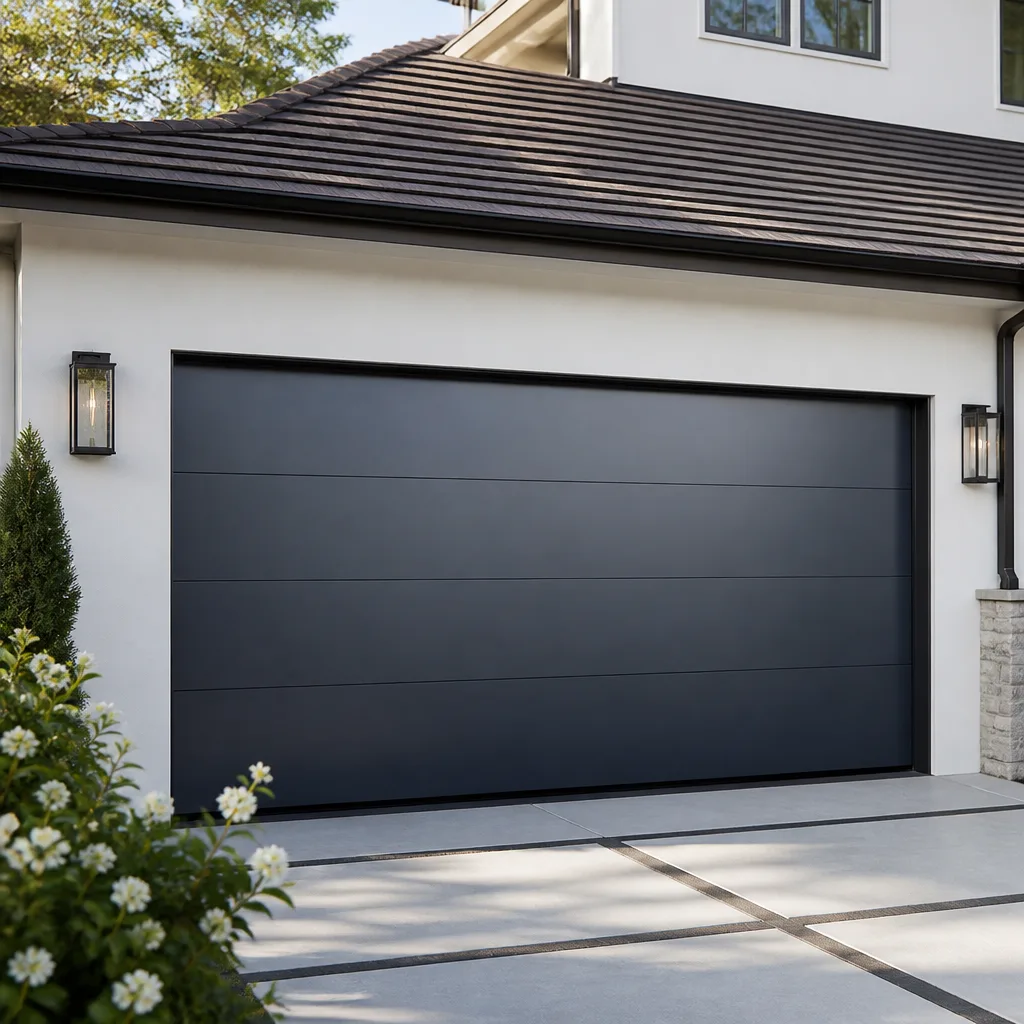
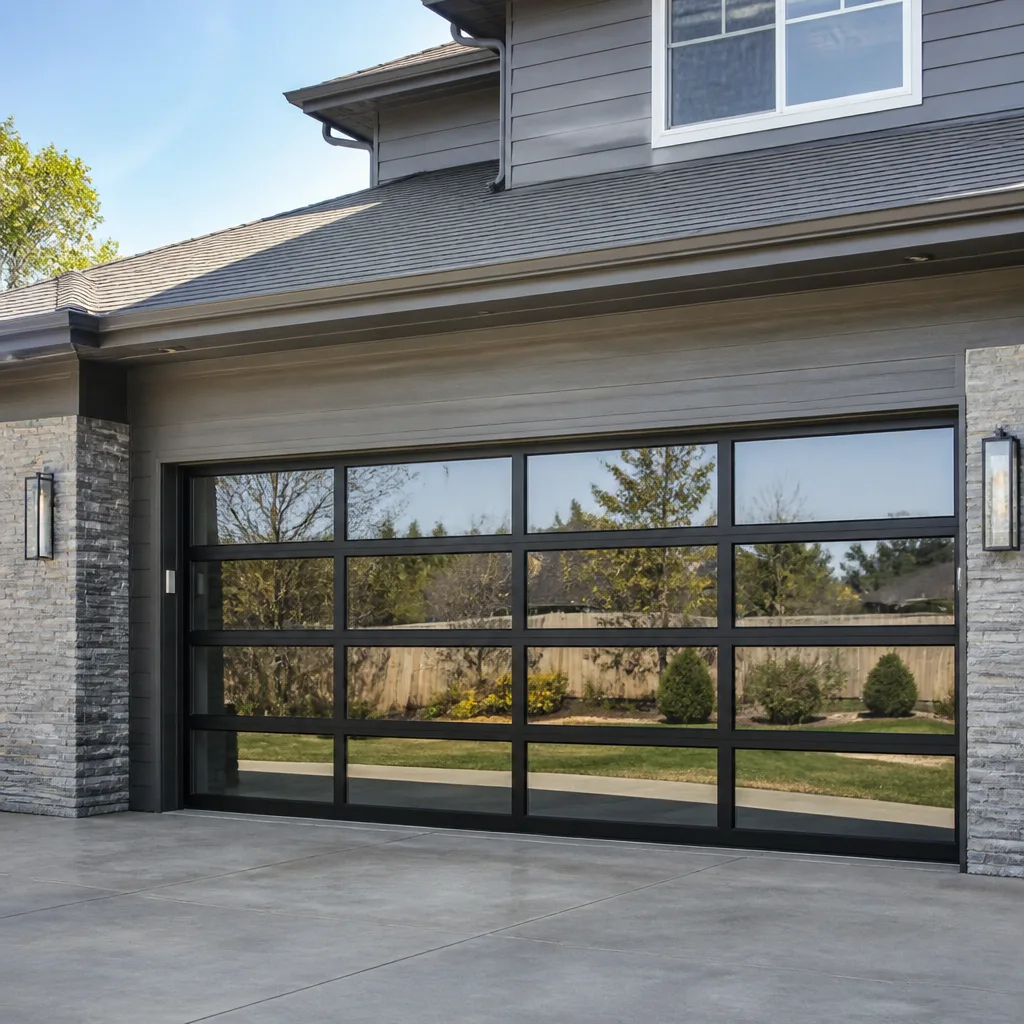
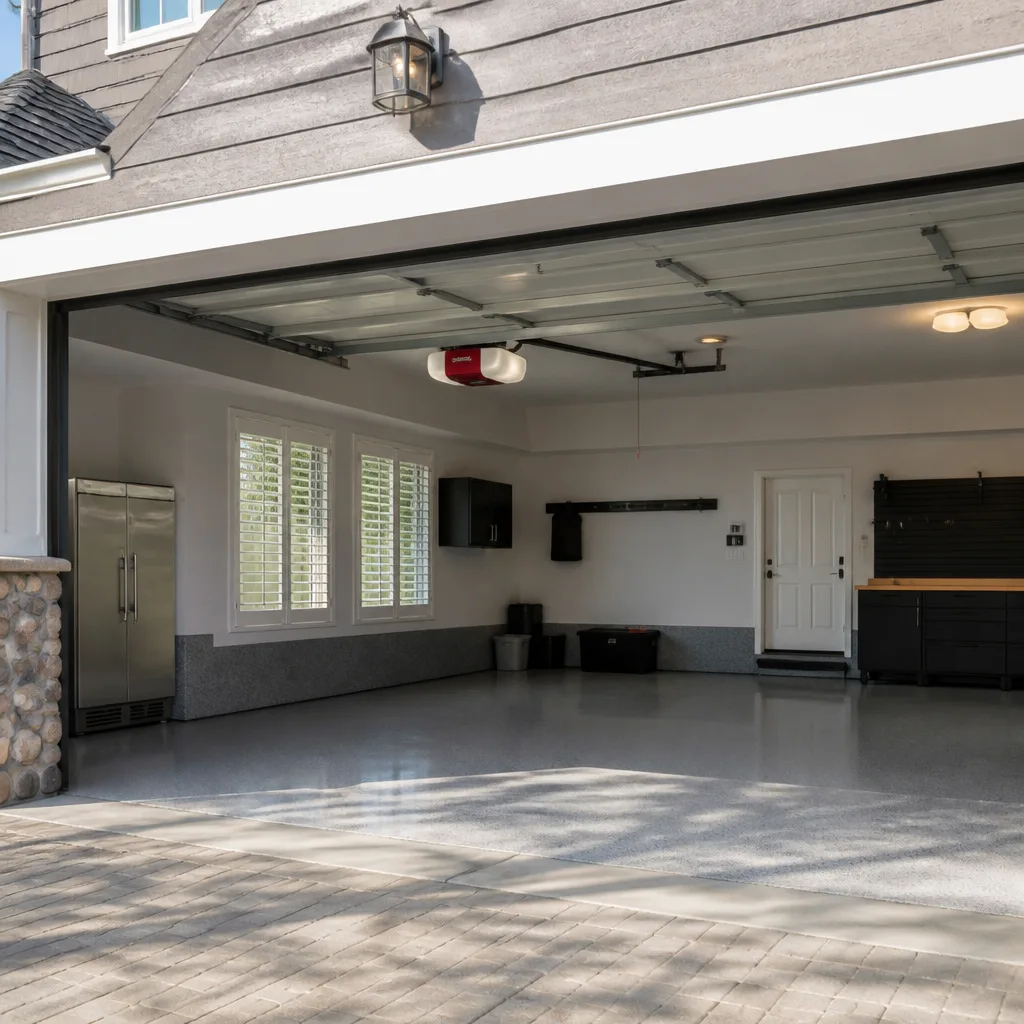
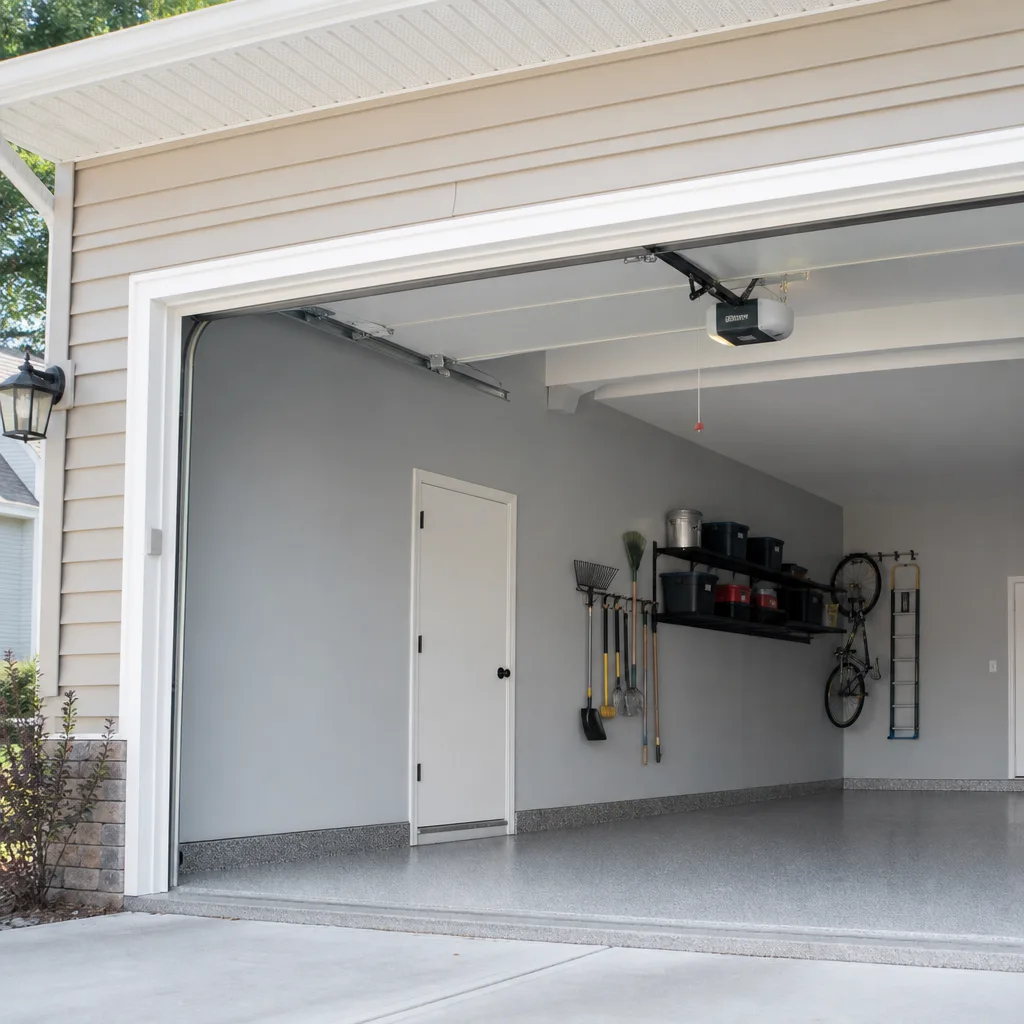
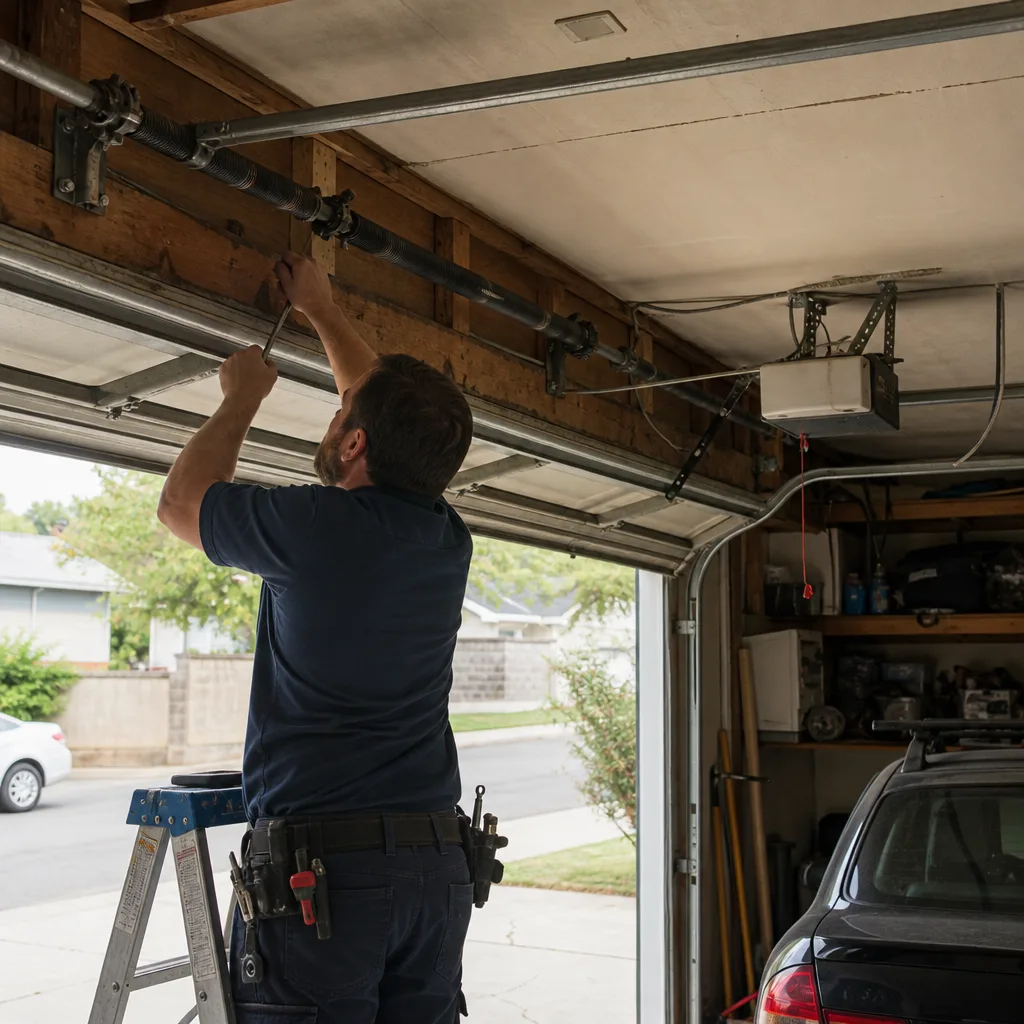 Before
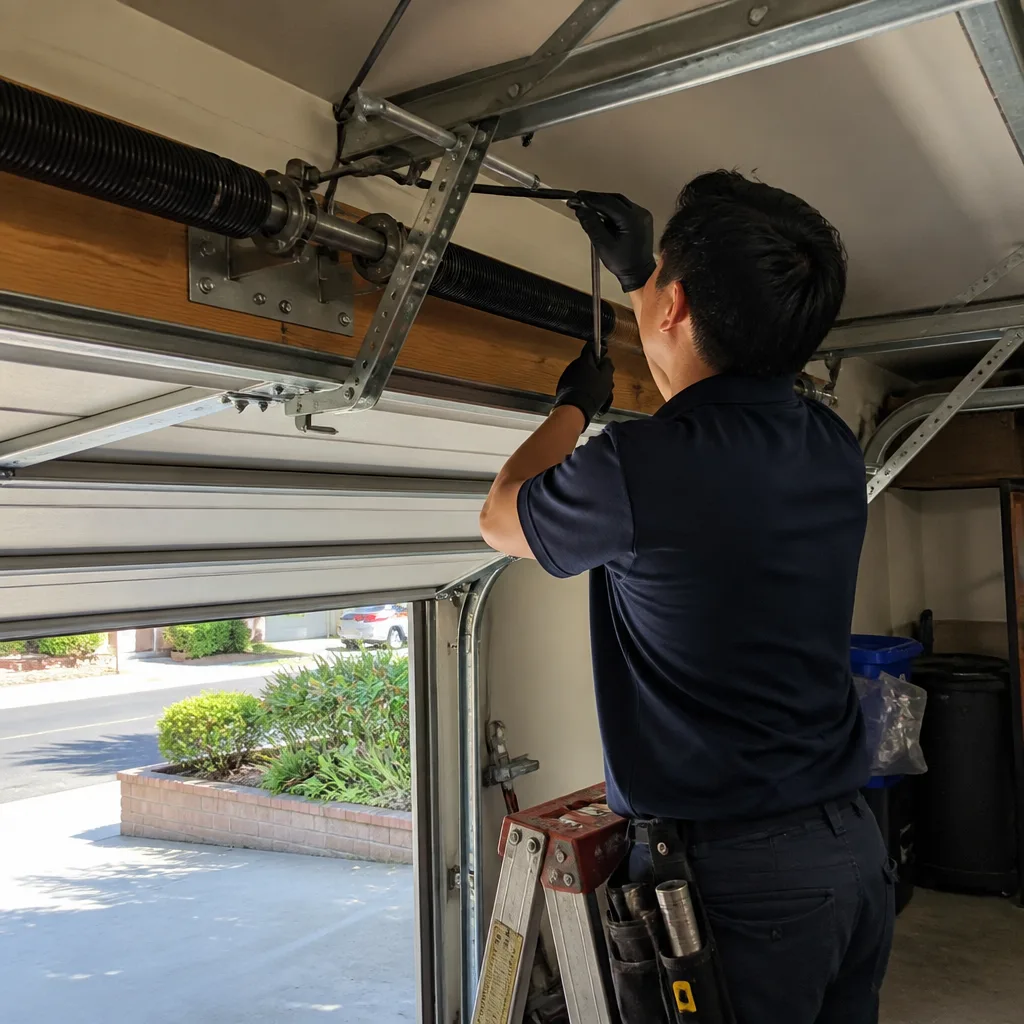 After
After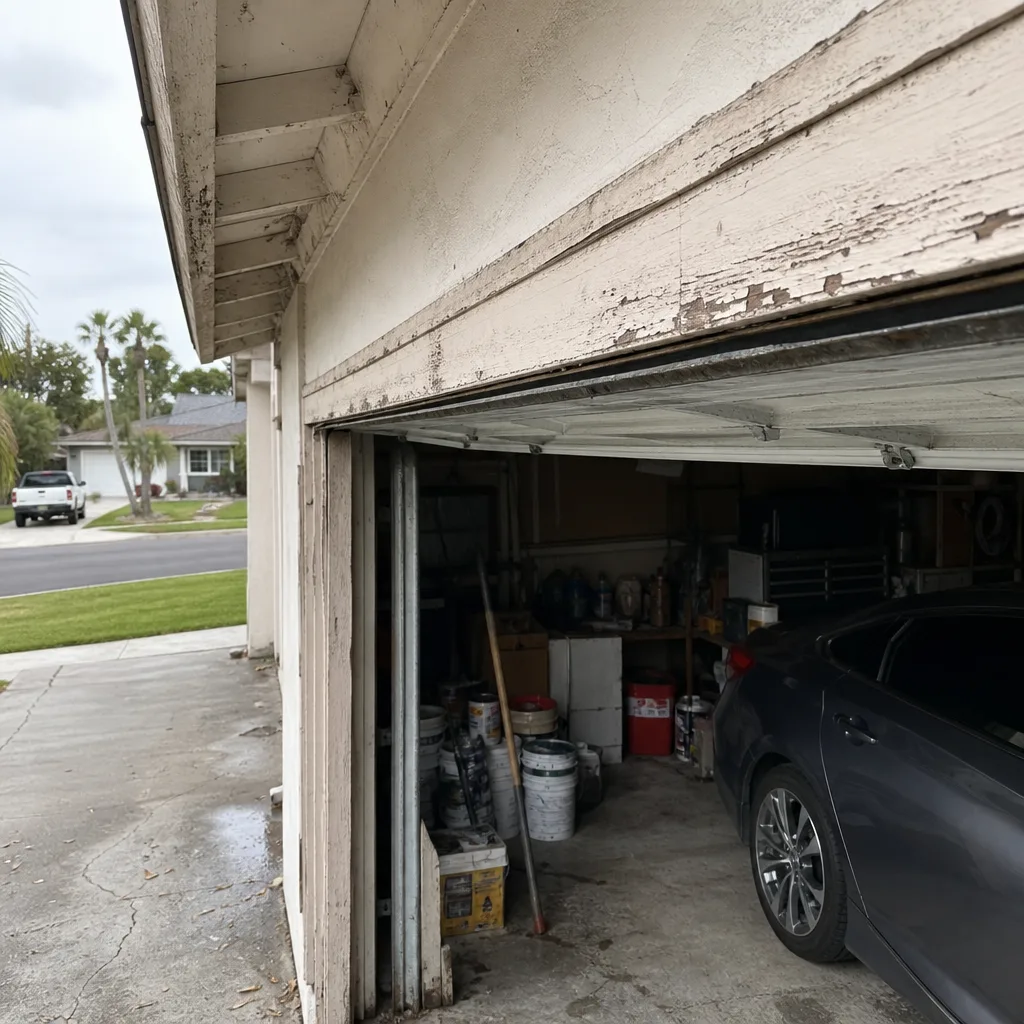 Before
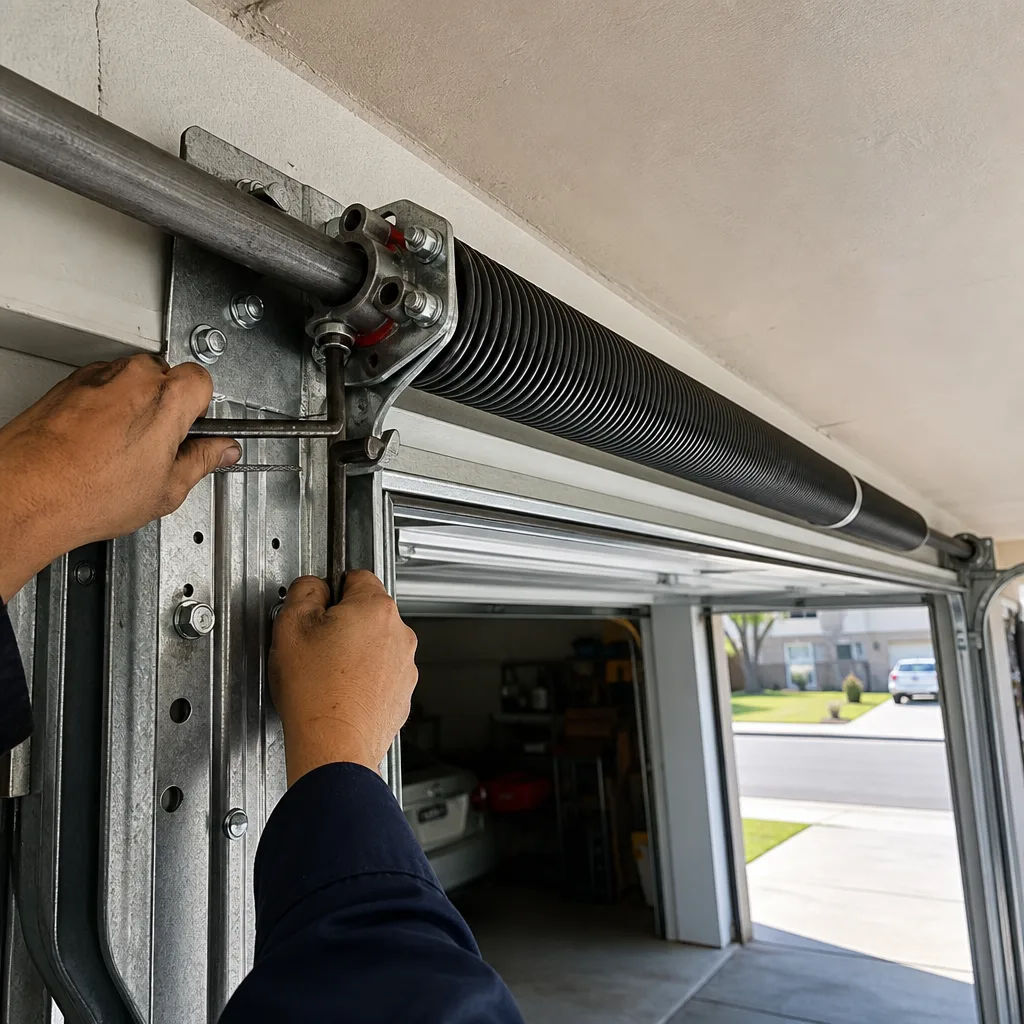 After
After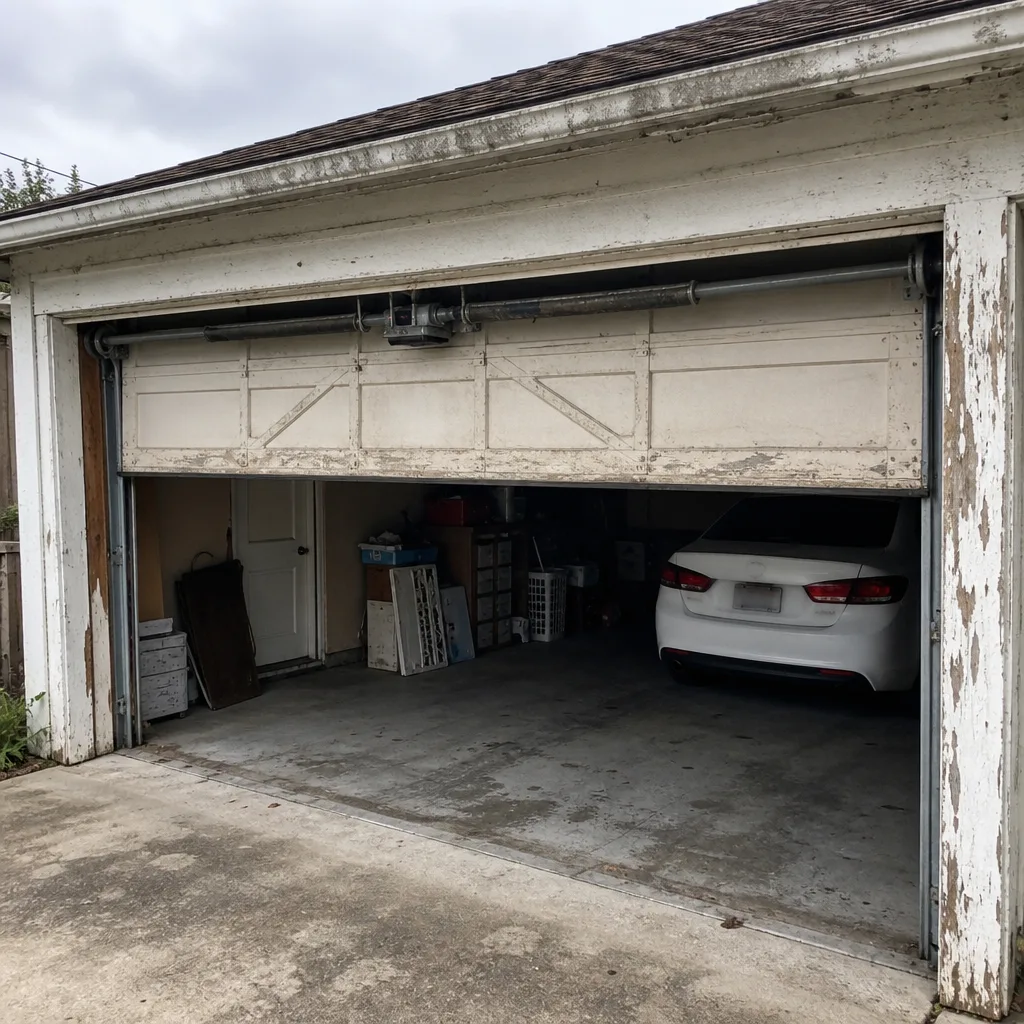 Before
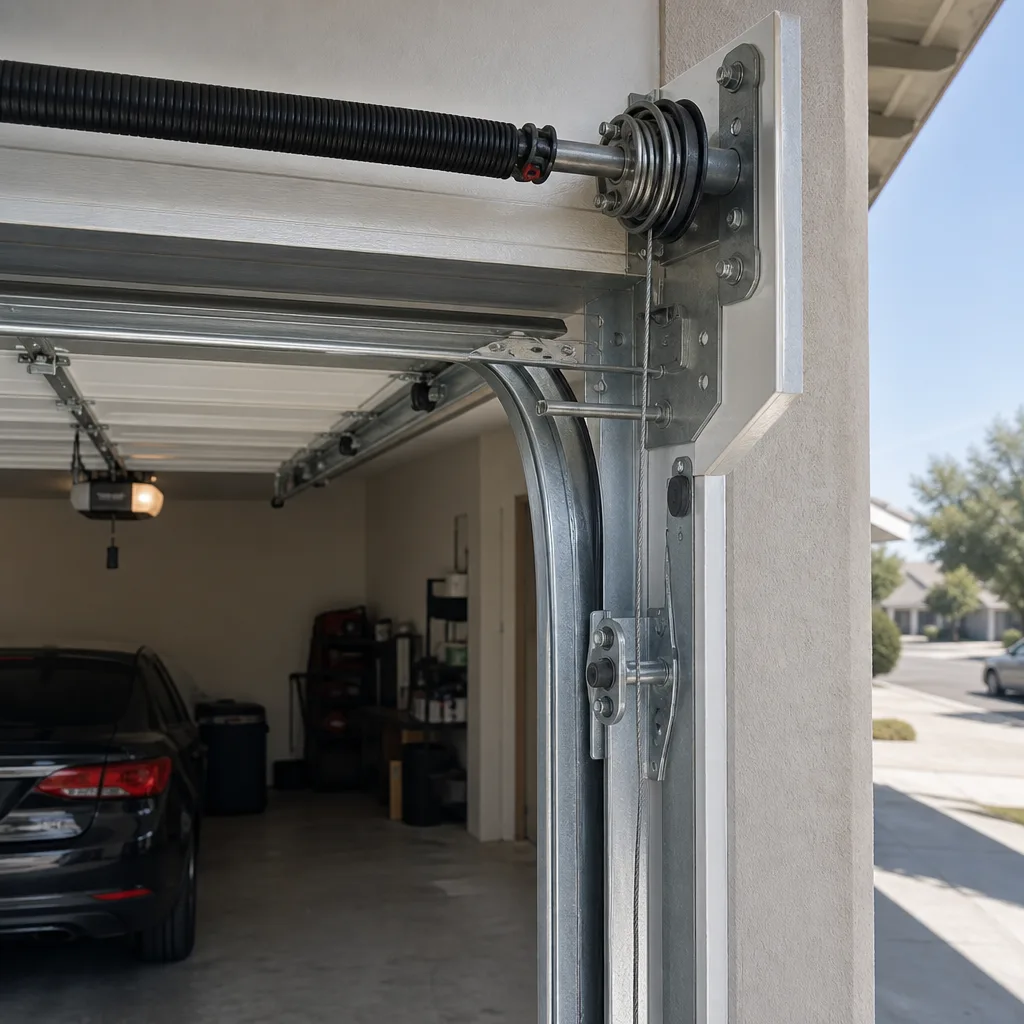 After
AfterThe Complete Guide to Garage Door in Santa Ana
The average household opens and closes their garage door about 1,500 times a year. That is more cycles than the front door, more than any window, more than the sliding glass door out back. Yet most Santa Ana homeowners have never once looked at the hardware holding that door up, or considered what the coastal humidity and dry Santa Ana wind cycles are doing to the springs and cables overhead. In this guide, we will walk through how a complete garage door system actually works, what this specific climate does to each component, how to read a contractor’s proposal so you know what you are paying for, and which materials and service intervals make sense for a home in this part of Orange County. For Garage Door Cost Breakdown: The Santa Ana Homeowner’s Reference for 2026, see our dedicated pricing guide.
Quick Answer
A garage door in Santa Ana must withstand roughly 1,500 annual cycles in a climate that alternates between marine-layer moisture and dry, high-velocity Santa Ana winds. The right system combines a properly gauged steel or composite panel, commercial-grade torsion hardware, a correctly matched opener, and weather seals rated for UV exposure, with professional inspection every 12 to 18 months. Cutting corners on any single component typically shortens the lifespan of the entire system and leads to repeat service calls.
Table of Contents
- How Santa Ana’s Climate Affects Your Garage Door
- What a Complete Garage Door System Includes
- Which Door Materials Hold Up Best Here
- Builder-Grade vs. Commercial-Grade Hardware
- How to Read a Garage Door Proposal
- Maintenance and Service Intervals for Santa Ana Homes
- Choosing the Right Opener for Your Setup
- Common Mistakes to Avoid
- When to Call a Professional
- Frequently Asked Questions
How Santa Ana’s Climate Affects Your Garage Door
Santa Ana sits in a unique pocket of Southern California. We are close enough to the coast to pick up marine-layer moisture in the early mornings, especially through late spring and early summer. By midday that layer burns off, and when the Santa Ana winds arrive from the northeast, the humidity drops fast and stays low for days. That swing, sometimes 40 points in a single day, puts stress on metal components that inland desert or consistently coastal cities do not experience in the same way.
Here is what we see in the field after 42 years of working in this area.
Spring tension fluctuation. Torsion springs are calibrated to a specific door weight and cycle count. Temperature swings change the metal’s modulus of elasticity, meaning the spring’s effective tension shifts slightly with the thermometer. In Santa Ana, where a January morning can start at 45 degrees and hit 75 by noon, those shifts happen daily. Over years, the fatigue accumulates faster than in a climate with steadier temperatures. We regularly see spring failures in the Floral Park and Washington Square neighborhoods around the seven-to-nine-year mark, where a more stable inland climate might stretch that to ten or twelve.
Cable corrosion. The marine layer deposits microscopic salt residue on exposed steel. Garage door cables, especially on homes near the 55 freeway corridor or south of 17th Street where the morning fog lingers longest, develop surface oxidation that is not always visible from the ground. The cable does not snap all at once. It frays internally first, then fails under load, often when the door is halfway open and the car is underneath. We check cable condition on every service call, and we replace cables that show any sign of degradation rather than waiting for failure.
Panel expansion and seal compression. Steel panels expand and contract with temperature. The paint systems on quality doors, like those from Clopay and Amarr, are formulated to flex with that movement. Builder-grade doors often are not. We see paint chalking and seal hardening on south-facing doors in the Morrison Park area, where afternoon sun is direct and intense. Once the bottom seal hardens, it no longer flexes to meet the concrete, and you get the gap that lets in dust during wind events and water during rare heavy rains.
Wind loading. The Santa Ana winds do not just rattle the door. They create pressure differentials across the panel surface. A door that is not properly reinforced, or that has a weak strut system, can bow inward or outward under sustained gusts. That bowing stresses the hinges and rollers, and over time it throws the door out of track alignment. We have responded to off-track calls in the Santiago Park and Meredith Parkwood areas during every major wind event for decades.
The takeaway: a garage door in Santa Ana is not a generic product. It is a system engineered for a specific set of environmental loads, and the hardware choices should reflect that.
What a Complete Garage Door System Includes
Most homeowners think “garage door” means the panel they see from the street. That panel is actually one of six interdependent components. When any one fails prematurely, the others compensate, and that compensation shortens their lives too. Understanding the full system helps you make better decisions about repair versus replacement, and it helps you spot a proposal that is patching one symptom while ignoring the underlying cause. See more guides & resources for deeper dives into each component.
Here are the six components, with their typical Santa Ana lifespans and failure modes:
- Panel (the visible door). Steel, fiberglass, wood composite, or aluminum. Lifespan 15-30 years depending on material and gauge. In Santa Ana, UV degradation and salt-air exposure are the primary wear factors on south and west exposures.
- Track system (vertical and horizontal rails). Guides the door’s path. Should be 14-gauge steel minimum for residential use. We find bent or poorly anchored tracks on many homes built during the 1980s and 1990s construction boom in Santa Ana, where builders often used lighter 16-gauge to save cost.
- Torsion spring(s). Counterbalances the door’s full weight. Rated by cycle count, typically 10,000 cycles for standard springs, 20,000 or 30,000 for high-cycle upgrades. Given our 1,500-cycle annual average, a standard spring lasts 6-7 years here. We recommend high-cycle springs for any home where the owners plan to stay.
- Cables and drums. Transfer spring force to the door. Cables are wear items. In Santa Ana’s humidity cycles, inspect annually after year three.
- Opener (motor and drive). Chain, belt, or screw drive with safety sensors. Modern openers include rolling-code security and battery backup, now required by California law for new installations. We cover opener selection in detail below.
- Weather seal (bottom, sides, top). PVC or rubber compound. The bottom seal is the hardest working, and it hardens fastest in our UV exposure. A compromised seal lets in dust, water, and pests, and it changes the thermal load on any conditioned garage space.
Each component has a rated lifespan, but those ratings assume ideal conditions. In practice, the weakest link determines when the system needs attention. A door with a failed spring but original cables and a ten-year-old opener is not a candidate for spring replacement alone, in our view. The cables have carried uneven load, the opener has strained against imbalanced weight, and the seals have been stressed by irregular door positioning. We evaluate the full system on every garage door repair in Santa Ana call, and we explain what we find before quoting any work.
Which Door Materials Hold Up Best Here
Santa Ana’s combination of strong UV, humidity cycling, and occasional wind loading makes material selection more consequential than in milder climates. Here is how the common options perform after years of local exposure.
Steel (24-gauge to 20-gauge). This is the most common residential material, and for good reason. Galvanized steel resists corrosion, and the gauge determines dent resistance and wind load capacity. For Santa Ana, we specify 24-gauge minimum for single doors, 22-gauge or 20-gauge for doubles, with a baked-on polyester or fluoropolymer paint system. The cheaper 26- and 27-gauge doors sold by some big-box retailers dent easily and flex under wind load. We have replaced builder-grade 26-gauge doors in the Riverview West and Artesia Pilar neighborhoods that were damaged beyond repair by wind pressure or minor impact.
Insulated steel (sandwich construction with polyurethane core) is worth considering if the garage shares a wall with conditioned living space, or if you use the garage as workshop space. The insulation value is modest, but the structural rigidity it adds to the panel is significant for wind resistance.
Fiberglass and vinyl. These materials do not corrode and they resist denting. The downside in Santa Ana is UV degradation. Fiberglass gel coats chalk and fade within eight to ten years on south exposures. Vinyl becomes brittle in our temperature extremes. We service these doors but we do not often recommend them for new garage door installation in Santa Ana unless the home has significant shade or the homeowner specifically wants the wood-grain appearance that fiberglass can mimic.
Wood and wood composite. Real wood is beautiful and it insulates well, but it demands maintenance. In our humidity cycles, wood absorbs moisture, swells, then dries and cracks. Without annual refinishing, a wood door in Santa Ana will show checking and delamination within five years. Wood composite (fiberboard with synthetic overlay) offers the appearance with less maintenance, though the overlay can separate at the edges if water gets behind it. We install wood and composite doors from Wayne Dalton and custom shops for homeowners who value the aesthetic and accept the upkeep commitment.
Aluminum and glass (full-view). Popular for modern architecture. Aluminum does not rust, but it is softer than steel and scratches easily. The glass panels add weight and thermal load. We see these primarily in newer construction and renovations in the Downtown Santa Ana and Eastside areas. They require precise installation and regular roller and track maintenance because the panel weight is concentrated in the frame.
For most Santa Ana homeowners planning to stay in their home, we recommend an insulated steel door from a manufacturer we know and stock: Clopay, Amarr, or Wayne Dalton, in a gauge and wind-load rating appropriate to the door size and exposure. The price difference between a quality steel door and a bargain unit is typically $300-$600 on a double door. One preventable service call erases that savings.
Builder-Grade vs. Commercial-Grade Hardware
The hardware hidden inside a garage door system, springs, cables, rollers, hinges, and bearings, determines how long the door runs quietly and how safely it operates. There is a meaningful difference between the hardware that comes standard on many new doors and the upgraded components we specify for Santa Ana’s conditions.
Torsion springs. Builder-grade springs are typically 10,000-cycle springs made from standard oil-tempered wire. They work. They are also sized to meet a minimum price point, not a maximum lifespan. Commercial-grade or high-cycle springs use thicker wire, tighter winding tolerances, and sometimes powder-coated finish for corrosion resistance. A 30,000-cycle spring costs roughly 40% more than a 10,000-cycle unit. Over fifteen years, you might replace the standard spring twice and the high-cycle spring once. The labor cost of those extra service calls usually closes the price gap entirely, and you avoid the inconvenience of two failures.
Rollers. The small wheels that ride in the track. Standard nylon rollers have no ball bearings and wear flat spots within a few years. We specify 13-ball bearing steel rollers with sealed nylon tires on every replacement. They roll rather than slide, they are quieter, and they last 10-15 years in normal use.
Hinges. 18-gauge stamped steel is common on builder-grade doors. We use 14-gauge galvanized hinges on heavy or wide doors, and on any door where the original hinges show stress cracking at the pin holes. The thicker gauge does not flex under wind load, and the galvanized finish resists the salt-air exposure we see near the 55 corridor.
Drums and bearings. These are invisible until they fail. Cast iron drums with stamped bearings are standard. We upgrade to cast aluminum drums with precision bearings on high-cycle installations. The aluminum does not corrode, and the precision bearings reduce friction that otherwise loads the opener and spring unevenly.
The hardware upgrade on a typical double-door replacement runs $200-$400 above the base specification. We explain this as a choice, not a requirement. But we also explain that in our experience, the upgraded hardware is what lets us stand behind the work with our 90-Day Done Right Promise and sleep soundly. The door either works for years, or it does not. We prefer to build it so it does.
How to Read a Garage Door Proposal
Not every proposal that says “replace garage door” describes the same scope of work. We have reviewed competitor quotes for Santa Ana homeowners who thought they were getting a full system and were actually getting a panel swap onto thirty-year-old track with original springs. Here is how to read a proposal so you know what you are buying.
Step 1: Check what is included, not just the bottom line. A complete replacement should list: door panel with specified size, material, gauge, and insulation value; track system (vertical and horizontal); torsion spring(s) with cycle rating; cables; rollers; hinges; bottom seal; side and top weatherstripping; opener (if included) with horsepower, drive type, and safety features; removal and disposal of old door; and warranty terms in writing. If any of these is missing, ask why.
Step 2: Verify the spring cycle rating. This is the most common place corners get cut. A proposal that says “new torsion spring” without a cycle count is probably a 10,000-cycle spring. Ask for the rating. In Santa Ana, where annual use is high and temperature swings accelerate fatigue, we consider 20,000 cycles the practical minimum for a homeowner planning to stay.
Step 3: Confirm the track is included. Reusing old track on a new door is false economy. The old track may not match the new door’s radius, it may be bent or poorly anchored, and the mounting brackets fatigue over time. We replace track on every full replacement.
Step 4: Ask about the opener. If the opener is more than eight years old, it should be evaluated for replacement. Older openers lack the safety sensors and force settings required by current code, and they strain against the different weight and balance of a new door. A proposal that replaces the door but not the opener may leave you with a mismatch that fails prematurely.
Step 5: Get the warranty in writing. Verbal promises are not enforceable. Our 90-Day Done Right Promise is printed on every invoice: if the work is not right, we return at no charge, no paperwork, no dispute. Parts warranties from manufacturers like Clopay and Amarr are separate and vary by component. A proposal should specify both the labor warranty and the parts warranty, and who honors each.
Step 6: Compare line items, not just totals. A $2,800 proposal with 30,000-cycle springs, 13-ball bearing rollers, and new track is not more expensive than a $2,400 proposal with 10,000-cycle springs, standard rollers, and reused track. It is a different product. We encourage homeowners to ask us to explain any line item they do not understand. A square deal starts with clear information.
Maintenance and Service Intervals for Santa Ana Homes
Garage doors are not maintenance-free. They are the largest moving part of the home, with high-tension springs and cables that require respect and periodic attention. The good news is that proper maintenance is straightforward and prevents the majority of emergency calls we receive.
Here is the schedule we recommend for Santa Ana’s climate:
- Monthly: Visual inspection from inside the garage with the door closed. Look for cable fraying, spring gaps or rust, roller wear, and seal condition. Listen for grinding, squealing, or irregular sounds during operation. Test the auto-reverse by placing a 2×4 flat on the floor under the door path.
- Every 6 months: Lubricate the torsion spring with a light silicone spray, the roller bearings if they are steel, and the hinge pivot points. Do not lubricate the track itself; that attracts dust and creates a grinding paste. Wipe the track clean with a dry cloth. Check the bottom seal for cracking or hardening.
- Annually after year 3: Professional inspection. By year three, cables show measurable wear, springs have accumulated significant cycle fatigue, and the opener’s force settings may have drifted. A trained technician checks spring tension balance, cable integrity, roller and hinge condition, track alignment, opener safety function, and seal replacement needs. In Santa Ana, we also check for corrosion on hardware near the coast and wind-load strut integrity.
- Every 12-18 months: Consider our $89 Seasonal Tune-Up. It includes full inspection, adjustment, lubrication, and safety testing. For seniors and veterans, the permanent 5% discount applies.
What homeowners can safely do themselves: the monthly visual check, the reversal test, and light lubrication of accessible pivot points. What we do not recommend DIY for: spring adjustment or replacement, cable replacement, or track realignment. These involve high-tension components that can cause serious injury without proper tools and training, and may require Garage Door Permits, Codes & Inspections in CA: What You Need to Know. We have seen the results of well-intentioned DIY spring work, and we would rather answer your call than respond to an accident.
Choosing the Right Opener for Your Setup
The opener does the lifting that your arm used to do, but its real job is controlled, safe movement. California’s Senate Bill 969, effective since 2019, requires battery backup on all new garage door opener installations. That law exists because homeowners were trapped in garages during power failures, including wildfire evacuations. Any proposal for a new opener in Santa Ana should include battery backup as standard, not optional.
We install and service garage door opener in Santa Ana systems from LiftMaster, Chamberlain, Genie, and Craftsman, and we are factory-familiar with their full product lines. Here is how the choices break down for local conditions.
Chain drive. The traditional choice. Reliable, economical, and capable of lifting heavy doors. The downside is noise. In a detached garage or where the bedroom is well separated, chain drive is fine. In the compact lots of Santa Ana’s older neighborhoods, where the garage often shares a wall with a bedroom or living room, the clatter carries.
Belt drive. Reinforced rubber or polyurethane belt replaces the chain. Significantly quieter, with equivalent lifting capacity for residential doors. We recommend belt drive for most Santa Ana installations, especially for attached garages and homes where the door is operated early morning or late evening. The price premium is typically $75-$150 over chain drive.
Screw drive. A threaded steel rod moves the trolley. Fewer moving parts, but the screw requires periodic lubrication and can be noisy. We see these less often in new installations and more in legacy systems that we maintain.
Wall-mount (jackshaft) openers. Mounted beside the door rather than overhead, these free ceiling space and work well with high or obstructed ceilings. They require a torsion tube and are not compatible with all door systems. We evaluate the existing hardware before recommending this option.
Smart features. Wi-Fi connectivity, smartphone control, and camera integration are now standard on mid-range and above openers. Useful for checking whether the door was left open, granting temporary access to service providers, or receiving alerts. We configure these features during installation and show homeowners how to use them.
Horsepower. ½ HP is adequate for most single steel doors. ¾ HP is our recommendation for double doors, insulated doors, or any wood or composite material. An underpowered opener strains, runs hot, and fails early. We size the opener to the door, not to a price point.
The opener should be matched to the door’s weight and cycle expectations, installed with proper safety sensor alignment, and programmed with force limits that respond correctly to obstruction. We test every installation with the door both warm and cold, because thermal expansion changes the resistance the opener senses.
Common Mistakes to Avoid
- Ignoring the spring cycle rating. A “new spring” that lasts five years instead of fifteen is not a bargain. Ask for the cycle count and do the math against your annual use.
- Reusing old track with a new door. The radius may not match, the mounting points fatigue, and the alignment issues that caused the old door to wear will damage the new one. Replace track with door.
- Choosing a door material for appearance alone. That wood-grain fiberglass looks beautiful in the showroom. In Santa Ana’s UV, it may look very different in eight years. Consider total cost of ownership, including maintenance or early replacement.
- Neglecting the bottom seal. A $15 seal left too long lets in water, dust, and rodents, and it changes the thermal boundary if the garage is conditioned. It also signals neglect to a prospective buyer.
- DIY spring or cable work. The torsion spring stores enough energy to cause serious injury or death. We have responded to emergencies where a homeowner’s attempt to save $200 resulted in an ER visit. This is not hyperbole. Call a trained technician.
- Accepting a verbal warranty. If it is not in writing on the invoice, it does not exist. Our 90-Day Done Right Promise is printed, signed, and transferable. Anything less is a conversation, not a commitment.
- Waiting for total failure. A noisy door, a slight sag, or a slow response from the opener are early warnings. Addressing them during normal hours prevents the emergency call at 10 PM on a holiday weekend, when the car is trapped inside and the opener has quit entirely.
When to Call a Professional
Call a technician when the door makes new or loud noises, moves unevenly, reverses unexpectedly, or fails to open or close completely. Call immediately if a spring is visibly gapped, a cable is frayed or off the drum, or the door has come out of the track. These are not maintenance items; they are safety hazards.
We also recommend a professional inspection before listing a home for sale, after any vehicle impact to the door, and whenever you are unsure of the system’s age or condition. Mainspring Garage Door Co. home offers free estimates in Santa Ana. Carl Dutton and our team answer the phone live, 24/7, including nights, weekends, and holidays. Call (562) 245-4879.
Frequently Asked Questions
Most common repairs in Santa Ana range from $180 for a cable replacement to $340 for a standard torsion spring replacement, with opener repairs typically between $150 and $400 depending on the component. We state the flat price before any work begins, and the price does not change once we see the job. Call (562) 245-4879 for an exact quote - estimates are free.
A quality steel door properly maintained lasts 20-30 years in Santa Ana. The limiting factors are typically the spring system (7-15 years depending on cycle rating) and the opener (10-15 years). UV exposure on south-facing doors and salt-air corrosion near the 55 freeway can shorten component life if not addressed with proper materials and maintenance.
Yes. Our trucks carry springs, cables, rollers, hinges, and openers for all major brands, so most repairs are completed in a single visit. We do not charge extra for same-day service, and we answer calls live 24/7. For installation and replacement work, we schedule a free measure and provide a written quote - that work is measured, ordered, and installed, not dispatched for same-day completion.
No. The price we quote after inspection is the price you pay. We do not quote low to get in the door, then add charges. If we find additional issues during the work, we stop and explain before proceeding. That is our definition of a square deal, and it is how we have operated since 1984.
Yes. We stock springs, cables, rollers, hinges, and openers compatible with LiftMaster, Chamberlain, Genie, Clopay, Amarr, Wayne Dalton, Craftsman, and Raynor. Our technicians are factory-familiar with each brand’s installation requirements and common failure modes. If we do not have a specific part, we will tell you before we arrive, not after.
If our work is not right, we return and make it right at no charge. No paperwork to file, no dispute process, no argument. The promise is printed on every invoice, in writing, and it covers labor and installation. Parts carry separate manufacturer warranties that vary by component. We honor both, and we handle the paperwork.
The Bottom Line
A garage door in Santa Ana works harder than most homeowners realize, and it works in conditions that test every component. The right system, steel or composite panel, commercial-grade hardware, matched opener, and quality seals, installed with attention to local climate factors, will run quietly and safely for decades. The wrong system, or the right system poorly maintained, becomes a series of inconvenient failures and unexpected costs. The difference is usually visible in the proposal details: cycle ratings, gauge numbers, and warranty terms that separate a square deal from a cheap fix. We have been doing this work in Santa Ana since 1984, and we are still here because we build it right the first time, state the price upfront, and stand behind it in writing.
Written by Carl Dutton, Owner at Mainspring Garage Door Co., serving Santa Ana since 2016.