
Last updated September 10, 2026
Full 25-point door and opener safety check with every visit - springs, cables, rollers, tracks, and your LiftMaster or Chamberlain opener included
You get a price before we start. It does not change when the truck arrives.
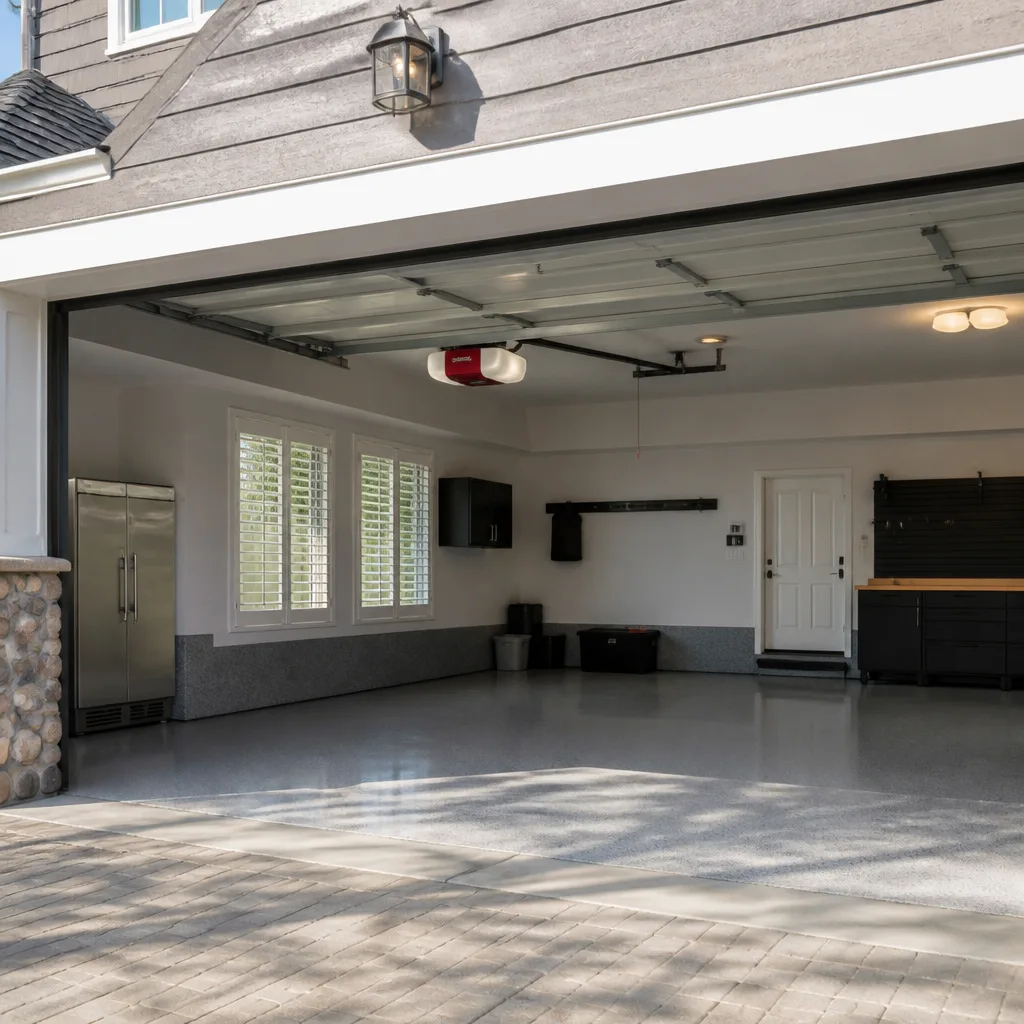
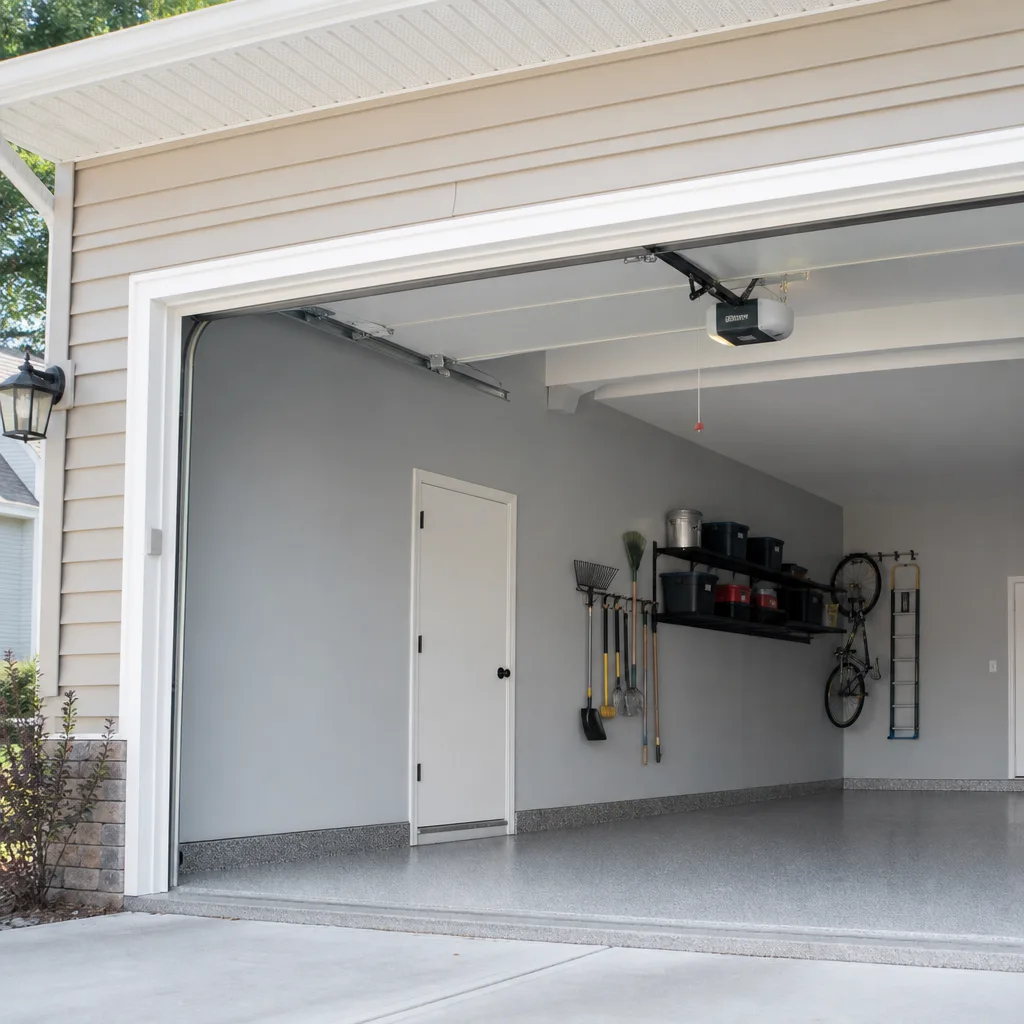
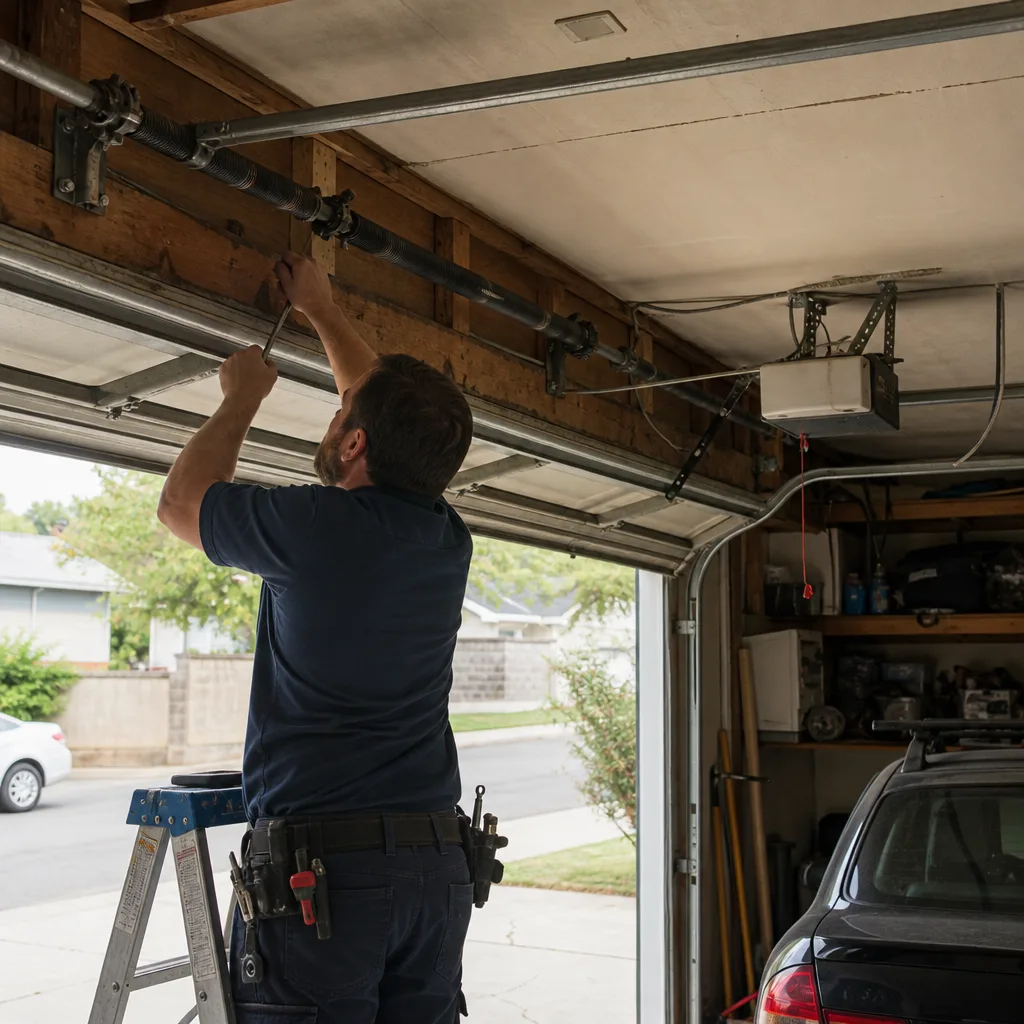 Before
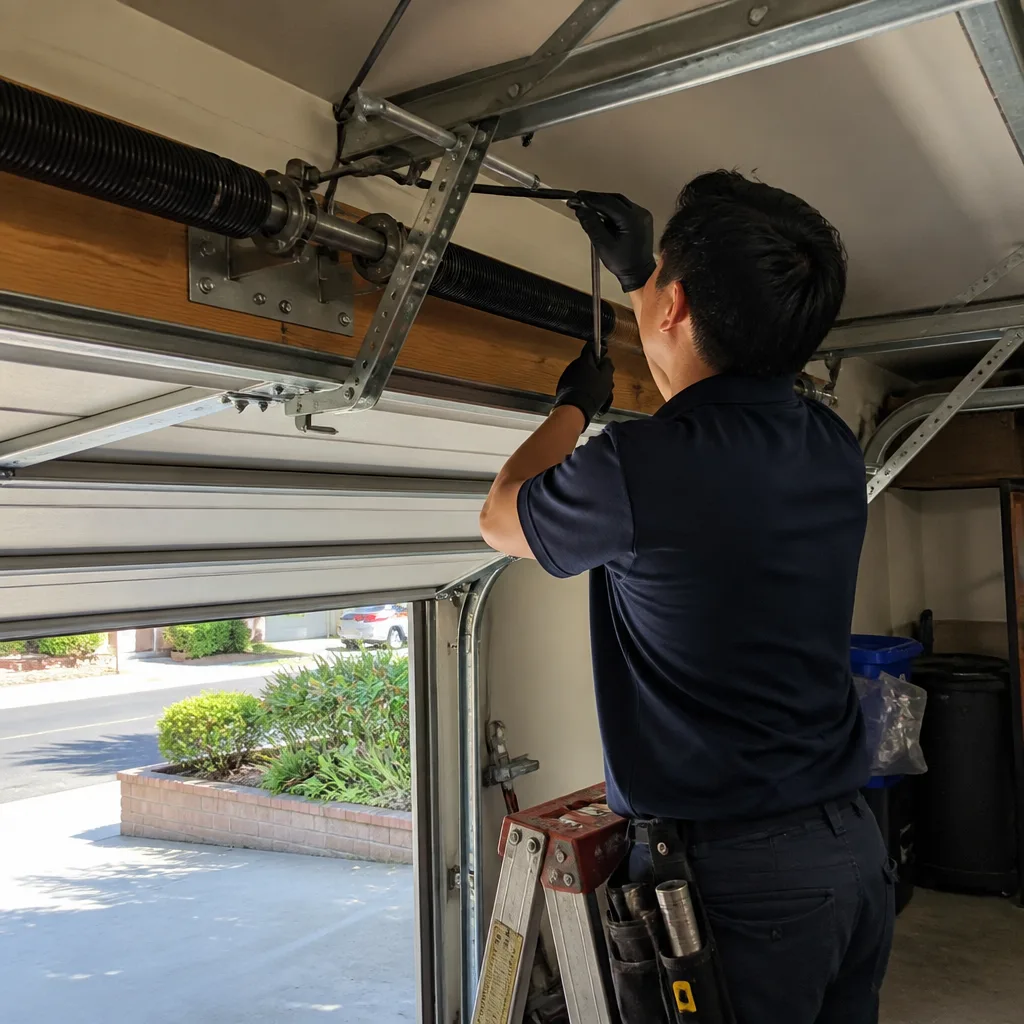 After
After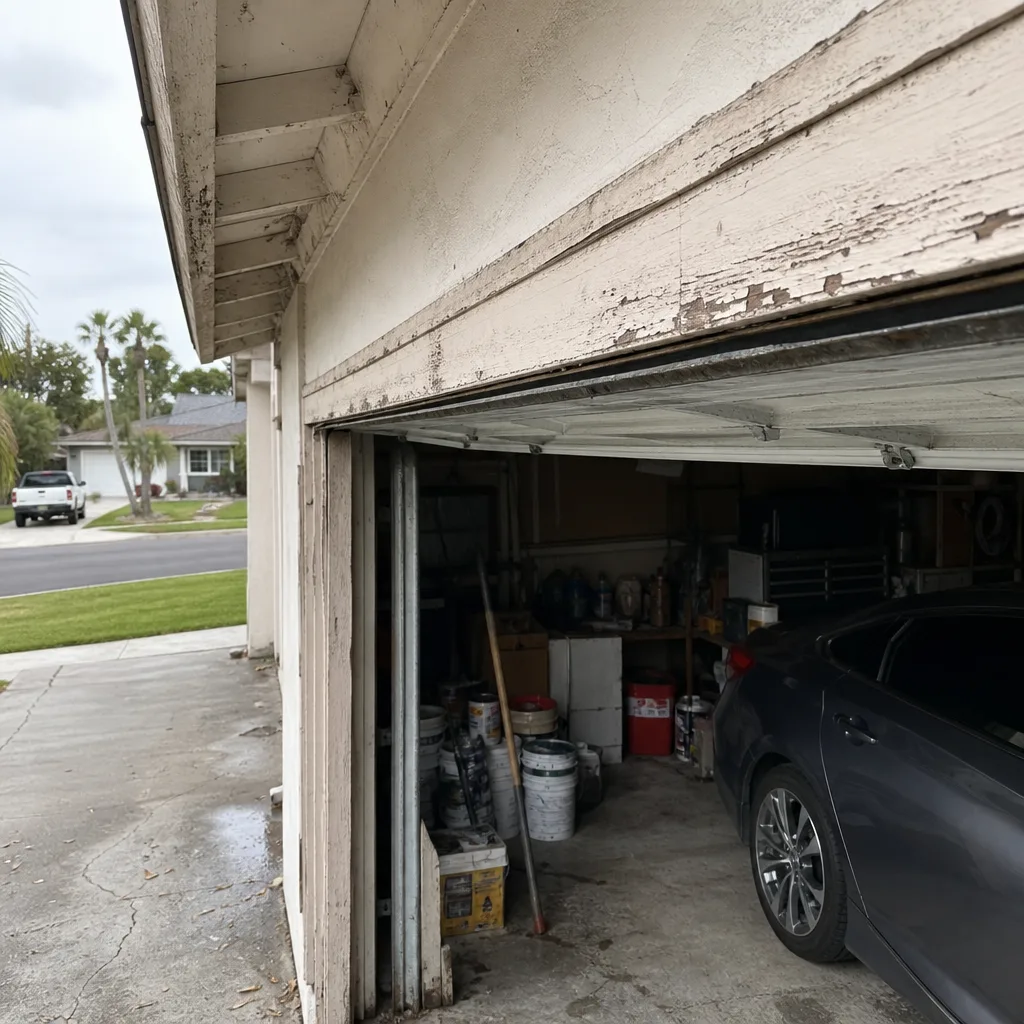 Before
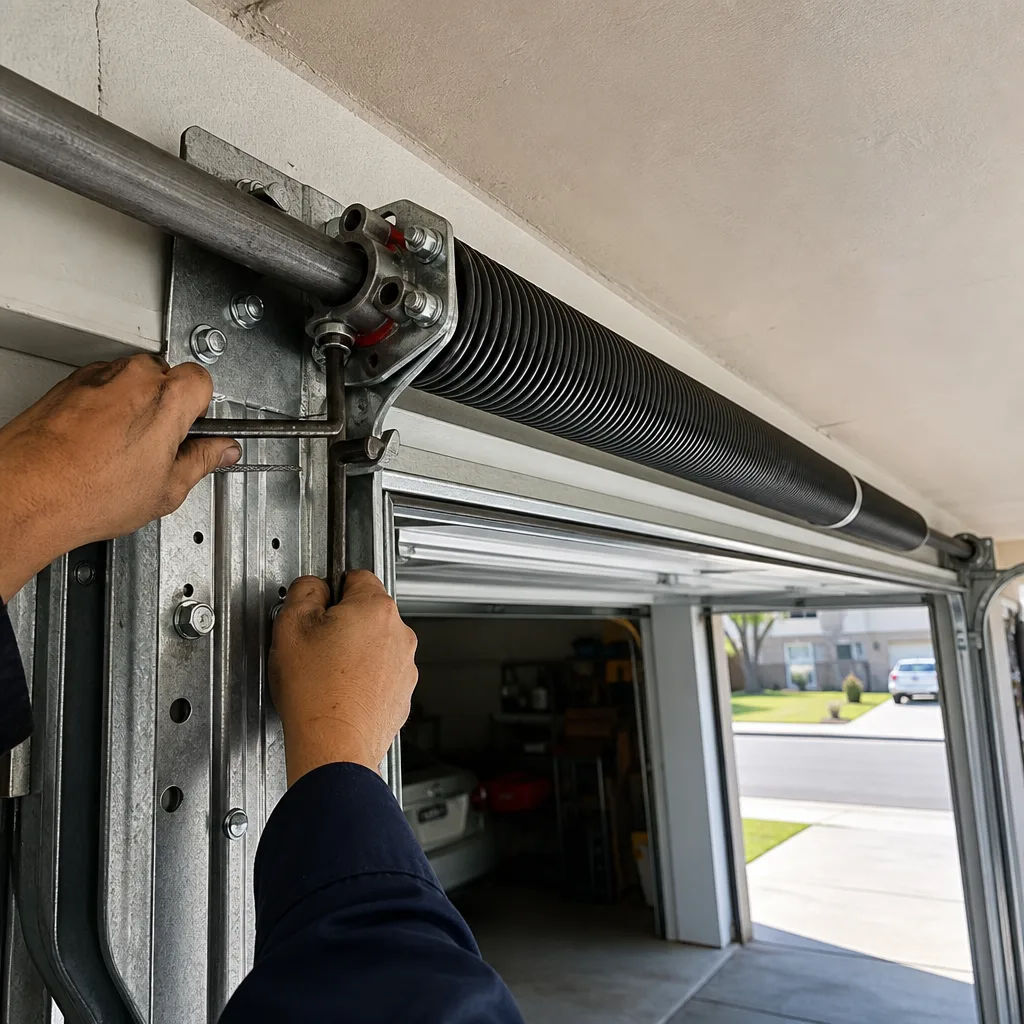 After
After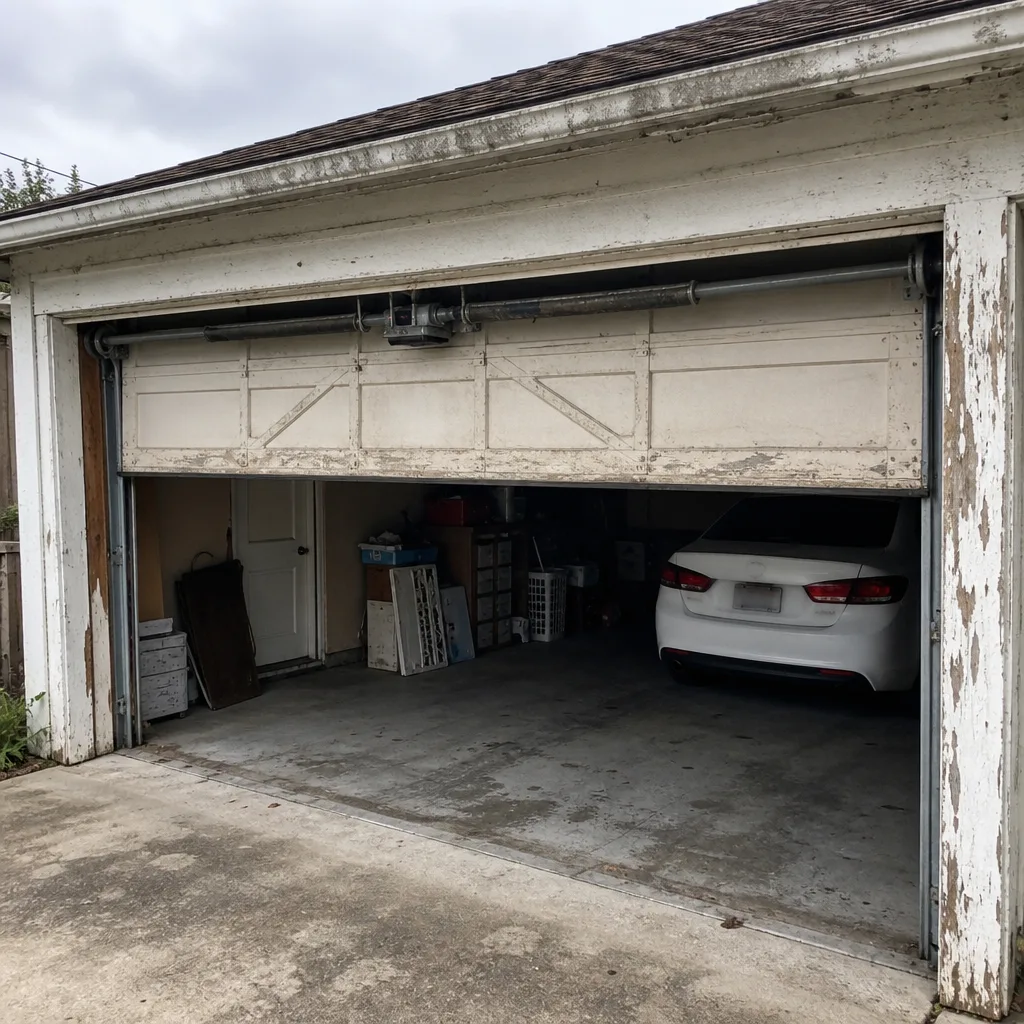 Before
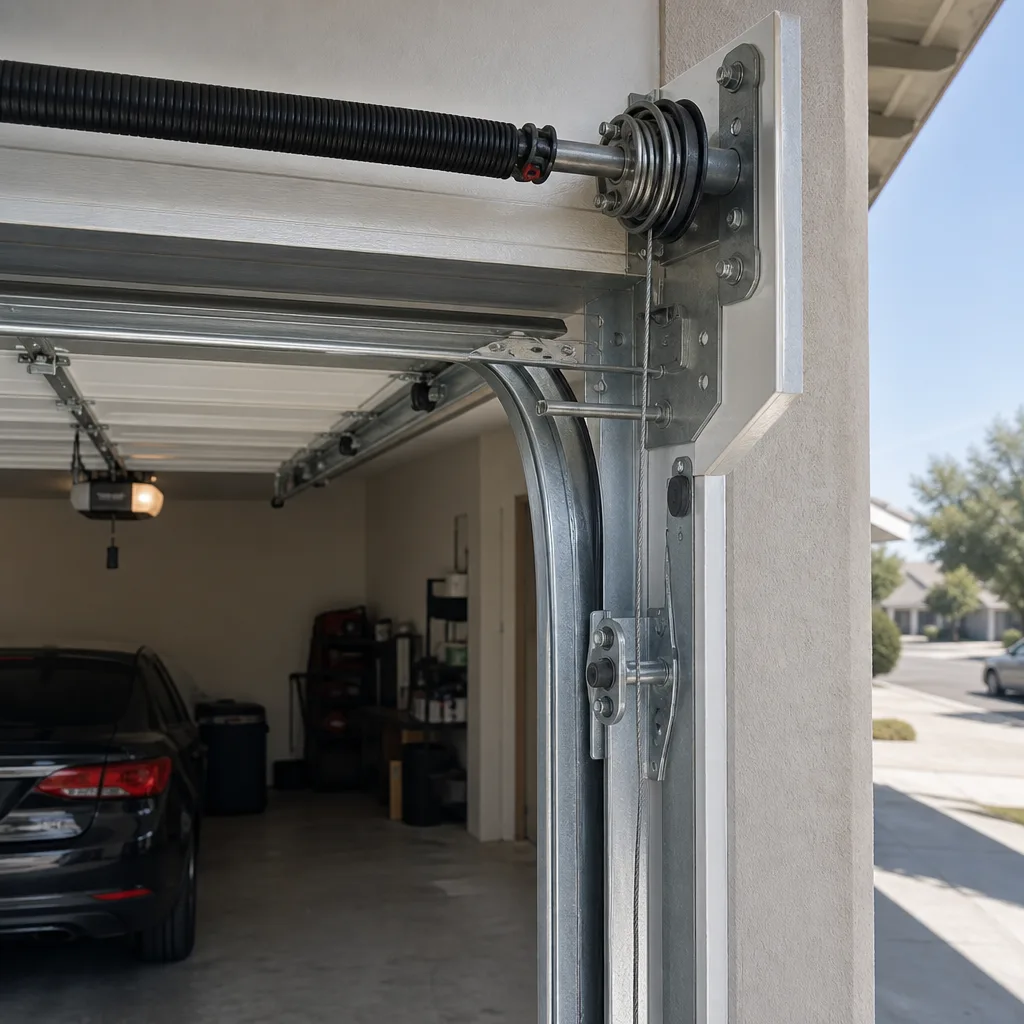 After
AfterDIY vs Professional Garage Door: The Santa Ana Homeowner’s Decision Guide
Torsion spring replacement is listed as a DIY project on dozens of websites. It is also the garage door task most frequently associated with serious hand and face injuries in California emergency rooms. In Santa Ana, where many homes were built during the 1960s and 1970s garage door boom, we still see original hardware that has cycled open and close over a hundred thousand times. The question is not whether you are handy. It is whether the task you are considering has a forgiving failure mode, or one that sends a steel winding bar through a wall. This guide maps every common garage door task by actual risk, true cost, and whether a YouTube tutorial tells the whole story; for Garage Door Cost Breakdown: The Santa Ana Homeowner’s Reference for 2026, see our dedicated breakdown.
Quick Answer
Most Santa Ana homeowners can safely handle weather seal replacement, track cleaning, lubrication, remote programming, and cosmetic panel repair. Any work involving torsion springs, cable tension, door balancing, or structural hardware should be left to a trained technician. The dividing line is not skill; it is stored mechanical energy and what happens when control is lost.
Table of Contents
- What Homeowners Can Safely Handle
- The Torsion Spring Problem: Why Physics Wins
- The True Cost of DIY: Beyond the Parts Receipt
- Insurance and Permit Realities in Santa Ana
- Using DIY Strategically to Save on Professional Repairs
- When Tools and Brands Matter
- Common Mistakes to Avoid
- When to Call a Professional
- Frequently Asked Questions
- The Bottom Line
What Homeowners Can Safely Handle
There is honest work a capable homeowner can do on a garage door system. The key is identifying tasks where the door’s weight and spring tension are not part of the equation.
Weather seal replacement. The vinyl or rubber seal at the bottom of the door simply slides into a retainer channel. No tools beyond a utility knife and perhaps a flathead screwdriver. In Santa Ana, where summer heat bakes asphalt and winter Santa Ana winds drive dust against the door, this seal degrades faster than in coastal cities. Replacing it every two to three years keeps debris, water, and pests out. Cost: $15-$40 in material, twenty minutes of work.
Track cleaning and lubrication. Steel rollers in steel tracks collect grime from Santa Ana’s dry, dusty air. Wipe the tracks with a rag, then apply a silicone-based lubricant to the rollers, hinges, and bearing plates. Avoid WD-40; it is a solvent, not a lubricant, and attracts dirt. This should be done twice yearly, ideally before summer heat expansion and before winter contraction cycles.
Opener remote programming. Modern openers from LiftMaster, Chamberlain, and Genie have straightforward pairing procedures. Press the learn button, press the remote button, done. The manual, or the manufacturer’s website, covers this precisely. No safety risk exists.
Cosmetic panel dent repair. Minor dents in steel panels can sometimes be pulled with a suction dent puller from an auto parts store. This is purely aesthetic, does not affect door operation, and carries zero mechanical risk. Aluminum and wood panels require different approaches; know your material before starting.
Photo-eye alignment. The safety sensors near the floor can be knocked out of alignment by a garbage bin or bicycle. Clean the lenses, ensure both LED indicators match, and adjust the brackets until they face each other squarely. This is a safety system, but adjusting it does not involve tension or weight.
These tasks share a common trait: if you stop mid-task, nothing dangerous happens. The door does not fall. Nothing is under load. That is the correct standard for homeowner work.
The Torsion Spring Problem: Why Physics Wins
A standard residential garage door weighs between 150 and 250 pounds. The torsion spring, mounted horizontally above the door, is wound tight enough to counterbalance that weight precisely. When the opener lifts the door, it is not lifting 200 pounds; it is lifting perhaps 10 pounds, because the spring carries the rest.
Here is what that means in practical terms. A properly wound torsion spring stores roughly the same energy as a coiled rattlesnake waiting to strike. The winding process requires inserting steel bars into a winding cone and adding tension, typically 30 to 40 quarter-turns. Each quarter-turn increases stored energy. A slip, a bar that does not seat fully, or a cone that cracks after years of corrosion, and that energy releases instantly.
The injuries are not theoretical. We have seen garage walls punctured by ejected winding bars. We have replaced doors where a spring failure snapped a cable and sent hardware into a parked car. The California Division of Occupational Safety and Health reports garage door spring incidents among the most common residential maintenance injuries requiring emergency care.
The risk is not about mechanical aptitude. A skilled mechanic who has never wound a torsion spring is still a novice at that specific task. The risk is about what happens at the moment control is lost, and whether the human body can react in time. It cannot.
In Santa Ana specifically, the climate accelerates spring fatigue. The dry heat of summer causes metal expansion and contraction cycles. The salt air that drifts inland from Newport Beach and Huntington Beach accelerates corrosion on hardware, particularly in neighborhoods like Floral Park and Washington Square where garages face prevailing winds. A spring that might last 15,000 cycles in a milder climate may fail sooner here. When it fails during a DIY replacement attempt, the conditions that weakened it also weaken the surrounding hardware.
Extension springs, the older style that run parallel to the horizontal tracks, carry similar risks with an added element: they are not contained in a shaft. When they break, they can whip through the garage. Safety cables, required by modern code, are supposed to contain this, but older Santa Ana homes often lack them.
We do not provide step-by-step spring replacement instructions. No responsible professional does. The correct information is available in trade training programs that include hands-on practice with an instructor present. Anything less is gambling with forces that do not forgive.
The True Cost of DIY: Beyond the Parts Receipt
The retail price of a torsion spring at a hardware store is $30 to $80. A professional spring replacement in Santa Ana typically runs $180 to $340. The gap seems to favor DIY. It does not, once full costs are accounted.
| Cost Element | DIY | Professional |
|---|---|---|
| Spring pair (retail vs. trade) | $60-$160 | Included in service price |
| Winding bars (proper steel, not screwdriver substitutes) | $25-$40 | Technician-owned |
| Vice grips, adjustable wrench set | $30-$60 | Technician-owned |
| Ladder rated for 250+ lb (most homeowner ladders are not) | $80-$150 | Company-owned |
| Time: research, purchase, execution | 4-8 hours | 1-1.5 hours |
| Secondary damage if error occurs | $200-$800+ | Covered by workmanship guarantee |
| Emergency room visit (national average) | $1,200-$3,000 | Not applicable |
The tool acquisition alone often erases savings on a single job. And these are the tools for one task. A proper garage door service vehicle carries hundreds of spring sizes, cable lengths, roller types, and hardware configurations because doors vary by age, manufacturer, and installation. A homeowner who buys one spring based on a parts number may discover that their door was retrofitted, that the drum size differs, or that the previous installer used an non-standard setup. We see this regularly in Santa Ana’s older neighborhoods, where doors have been modified through multiple ownerships.
Time has value. The homeowner who spends a Saturday on a repair has lost that Saturday. If the repair fails, the second Saturday is lost too. And the cost of a professional fix after a DIY attempt often exceeds the original quote, because the technician must first undo the partial work and assess any damage.
There is also the cost of incorrect diagnosis. A door that opens slowly might need a spring adjustment, but it might also have a failing opener gear, bent track, or seized roller. Replacing the spring addresses none of these. A professional diagnosis identifies the actual failure mode. In our experience, roughly one in five Santa Ana homeowners who call after a DIY attempt describe a problem that differs from what they attempted to fix.
Insurance and Permit Realities in Santa Ana
Homeowner’s insurance policies contain exclusions that surprise people. Most standard policies exclude damage resulting from “work performed by unlicensed persons” on structural or mechanical systems. A garage door is structural; it is often the largest moving component of the house and, when attached, affects the building envelope.
If a DIY spring replacement fails and the door falls on a vehicle, or injures a person, the insurer may deny the claim based on the homeowner’s performance of specialized mechanical work. The policy language varies, but the pattern is consistent: insurers expect structural and high-tension mechanical work to be performed by qualified tradespeople. Documentation matters. A receipt from a licensed, insured contractor supports a claim. A hardware store receipt for parts does not.
Permits in Santa Ana are required for garage door replacement, not for repair. However, the boundary between repair and replacement blurs when structural components are involved. Replacing a door panel is repair. Replacing the door, tracks, and hardware is replacement. Altering the spring system to accommodate a heavier door is often considered modification, which may trigger permit requirements. The Garage Door Installation in Santa Ana page covers permit specifics for full replacements.
More critically, unpermitted structural work can complicate home sales. Santa Ana’s real estate market includes many buyers seeking vintage homes in neighborhoods like Heninger Park and Delhi. A home inspection that reveals non-standard garage door hardware, or evidence of unpermitted modification, can delay closing or reduce offer price. The cost of proper permitting, or of bringing DIY work up to code before sale, far exceeds the original savings.
Professional garage door companies carry general liability and workers’ compensation insurance. If something goes wrong during a professional repair, the homeowner is not the responsible party. That transfer of risk has value that does not appear on a parts receipt.
Using DIY Strategically to Save on Professional Repairs
The intelligent approach is not all-or-nothing. It is using homeowner effort where it reduces professional billable time without creating risk.
- Perform routine maintenance yourself. Clean and lubricate tracks and rollers every six months. Inspect cables for fraying, springs for gaps in the coils, and hardware for looseness. Document what you observe. This maintenance extends component life and prevents emergency failures.
- Learn your door’s specifications. Note the manufacturer, model, size, and approximate age. Check whether you have torsion or extension springs. Photograph the spring setup, the opener model plate, and any stickers on the door interior. This information allows a phone quote to be more accurate, reducing diagnostic time on site.
- Accurate problem description saves money. When you call for Garage Door Repair in Santa Ana, describe symptoms precisely: “The opener runs but the door does not move” differs from “The door starts to open then reverses” differs from “I heard a loud bang and now the door is crooked.” Each description points to a different failure mode. A technician who knows the likely cause arrives with the right parts, reducing trip time and diagnostic labor.
- Handle cosmetic and weatherproofing tasks. Replace weather seal, touch up paint, align photo-eyes. These do not affect mechanical function but improve appearance and efficiency. They are also tasks where homeowner attention to detail often exceeds what a time-pressed technician provides.
- Know when to stop. If a task involves the spring, cable, or door balance, hand it off. If you have begun a task and encountered unexpected resistance, hardware variation, or uncertainty, stop. The cost of completing a half-started repair is always higher than the cost of a clean professional start.
This approach respects both the homeowner’s capability and the professional’s expertise. It also builds a relationship with a local company that knows your door’s history, which matters when the same door needs service five years later.
When Tools and Brands Matter
Not all garage door components are interchangeable. The opener that worked with your 1998 Craftsman door may not properly control a modern Clopay insulated steel door with heavier lift requirements.
Brand familiarity matters for diagnostics and parts availability. A technician who works regularly with LiftMaster openers recognizes the error code patterns that indicate a logic board failure versus a travel limit drift. Someone factory-familiar with Genie systems knows the specific screw drive lubrication requirements that prevent stripped carriages. Chamberlain’s MyQ connectivity issues have known troubleshooting sequences that save hours of guesswork.
For doors themselves, Clopay’s Intellicore insulation system requires specific bottom seal profiles. Wayne Dalton’s TorqueMaster spring system is proprietary and not serviceable with standard tools. Amarr’s section joint designs affect how panels separate for individual replacement. A technician who has worked with these brands across hundreds of installations applies that pattern recognition to your specific problem.
In Santa Ana, we see a concentration of certain brands by neighborhood era. Homes built in the 1980s and 1990s often have original Genie screw drive openers. The 2000s building boom favored LiftMaster chain drives. Recent infill construction in the downtown core typically specifies Clopay or Amarr doors with belt-drive openers for noise reduction in dense lots. This local pattern knowledge speeds diagnosis.
The homeowner who understands their brand and model can communicate more effectively with any technician. The homeowner who expects generic parts to work in any system will often be disappointed, and sometimes endangered by incorrect spring rates or incompatible safety systems.
For opener-specific service and upgrade guidance, see our Garage Door Opener in Santa Ana page.
Common Mistakes to Avoid
- Using a screwdriver as a winding bar. The internet is full of videos suggesting this substitute. A screwdriver is not rated for torsion spring torque. It will bend, slip, or shatter. The resulting uncontrolled release of spring energy causes the most serious injuries we encounter.
- Lubricating the spring itself. Some guides recommend this. Torsion springs do not need lubrication, and grease attracts dust that accelerates wear. Lubricate bearings, hinges, and rollers only.
- Ignoring the door balance after opener work. Homeowners who replace an opener without checking door balance strain the new unit. A door that is not properly balanced will burn out the opener motor prematurely. In Santa Ana’s heat, that premature failure often occurs on the hottest day of summer.
- Mixing old and new springs. Springs should be replaced as a matched pair. Installing one new spring alongside one fatigued spring creates uneven lift, stressing cables, rollers, and the opener. The door will track poorly and the new spring will fail sooner.
- Disconnecting the opener without securing the door. The manual release rope is for emergency use, not routine maintenance. A door with a broken spring, or one that is simply out of balance, can slam shut when the opener is disengaged. Always verify the door stays at half-open position before working underneath it.
- Buying parts based on door size alone. Spring selection depends on door weight, track radius, drum size, and cycle life rating. A 16-foot door might need a 0.225 wire spring or a 0.250, depending on construction. The wrong spring rate damages the entire system.
- Neglecting the Santa Ana wind load. Our namesake winds exert lateral pressure on garage doors, particularly wide double-car openings. Bracing and track anchorage that suffice in calm climates may flex or fail here. Reinforcement struts, often omitted in DIY panel replacement, are essential for wind resistance.
When to Call a Professional
Call a professional when the task involves stored mechanical energy, structural load, or safety system integration. Specifically: torsion or extension spring work; cable replacement or tension adjustment; door balancing and weight testing; track realignment or replacement; opener installation on a new door; any repair after the door has fallen, jammed, or made a loud bang.
Also call when you have attempted a repair and the problem persists or worsens. Continued operation of a malfunctioning door damages components that were not originally failed, multiplying the repair scope.
Mainspring Garage Door Co. offers free estimates in Santa Ana. A technician will assess your door, identify the actual failure mode, and state a flat price before any work begins. Most repairs are completed in a single visit because our trucks carry the full range of springs, cables, rollers, and openers for common brands. Call (562) 245-4879 to schedule.
Frequently Asked Questions
Torsion spring replacement in Santa Ana typically costs $180 to $340 for a standard residential door, including parts, labor, and adjustment. Extension spring repair runs slightly less, $150 to $280. The exact price depends on door size, spring type, and whether additional components like cables or rollers need replacement. We state the flat price before starting work, and our $50 off any repair over $250 applies automatically. Call (562) 245-4879 for an exact quote; estimates are free.
You should not. Springs must be replaced as a matched pair. One new spring alongside one worn spring creates uneven lift forces that damage cables, rollers, hinges, and the opener. The door will not hang level, the tracks will wear unevenly, and the new spring will carry excess load and fail prematurely. This is one of the most common secondary problems we correct after DIY attempts.
Probably not, if the damage results from high-tension mechanical work performed by an unlicensed person. Most policies exclude claims arising from unqualified work on structural or mechanical systems. A failed DIY spring replacement that damages a vehicle or injures someone would likely be denied. Professional repair by an insured contractor transfers this liability. Check your specific policy language; the exclusion is usually found in the “conditions and exclusions” section.
Listen and observe. If the opener runs but the door does not move, the opener carriage or trolley may be disconnected, or the spring may be broken. If the door starts to open then reverses, the springs may be weak or the safety sensors misaligned. If the door is crooked in the opening, a cable has likely failed or come off the drum. If you hear a loud bang from the garage, a spring has probably broken. Accurate description of these symptoms when you call allows us to arrive with the correct parts and fix it in one visit.
Yes, for repair and emergency calls. We answer the phone with a live person 24 hours a day, including nights, weekends, and holidays. Most repairs are completed in a single visit because our technicians arrive with springs, cables, rollers, and openers for all major brands already on the truck. For installation and replacement work, we schedule a free measure and provide a written quote; that work is measured, ordered, and installed on a planned date.
Clean and lubricate tracks, rollers, and hinges with silicone-based lubricant every six months. Inspect cables for fraying and springs for visible gaps or rust. Test the door balance by disconnecting the opener and lifting manually; the door should stay at half-open. Check that safety sensors align and the reversal function works. Keep the weather seal intact. These simple tasks-detailed in our Garage Door Repair Maintenance Checklist for Santa Ana Homeowners-prevent the wear patterns that lead to emergency failures, particularly in Santa Ana’s heat and dust conditions.
The Bottom Line
The DIY-versus-professional question is best answered task by task, not as a philosophy. Maintenance, weatherproofing, and cosmetic work belong to the capable homeowner. Any task involving the torsion spring, cable tension, or door balance belongs to a trained technician with the right tools and insurance. The true cost of DIY includes tools, time, risk, and the potential for compounded problems. The strategic homeowner does the maintenance, learns the system well enough to describe problems accurately, and hands off the dangerous work to professionals who will stand behind the result; explore more guides & resources to keep your system running smoothly. In Santa Ana’s climate, with its heat cycles and wind loads, that division of labor protects both your safety and your investment.
Written by Carl Dutton, Owner at Mainspring Garage Door Co., serving Santa Ana since 2016.